
Third-party logistics, known as 3PL, is the practice of outsourcing warehousing, order picking, packing, and shipping to a specialized provider. For TikTok sellers, 3PL is no longer optional. TikTok Shop’s 2026 logistics mandates have ended Seller Shipping, forcing sellers to integrate with TikTok’s API and purchase labels through the platform. Sellers who understand why TikTok sellers need 3PL gain a direct operational advantage: faster dispatch, fewer errors, and better account health signals that TikTok’s algorithm rewards with greater visibility. Usiprep’s clients, for example, report a 30% reduction in fulfillment costs after switching to a dedicated 3PL model.
Why TikTok sellers need 3PL: the core logistics challenge
TikTok selling looks simple from the outside. You post a video, orders come in, and you ship. The reality is far more demanding, and in-house fulfillment breaks down fast as volume grows.
The limits of handling fulfillment yourself
Self-fulfillment works at low order volumes, typically fewer than 50 orders per day. Beyond that threshold, picking errors multiply, dispatch times slip, and your team spends more time packing boxes than creating content. TikTok’s algorithm penalizes slow dispatch and poor tracking consistency, which directly reduces your product’s visibility in the feed.

The problem compounds during viral moments. A single TikTok video can drive hundreds of orders within hours. Without warehouse infrastructure and a trained fulfillment team, you cannot physically keep up. Manual order handling overwhelms teams and degrades the seller metrics that TikTok uses to rank your shop.
TikTok’s 2026 shipping mandate changes everything
TikTok ended Seller Shipping in february 2026. Sellers can no longer purchase labels through their own carrier accounts. Shipping labels must now come through TikTok’s platform, and all fulfillment systems must connect to TikTok’s logistics API for order updates, label generation, and tracking synchronization. This is not a minor policy tweak. It is a structural shift that makes API-connected fulfillment a hard requirement, not a nice-to-have.
Sellers who ignore this face account penalties, suppressed listings, and potential suspension. The compliance bar is now technical, not just operational.
Pro Tip: Before choosing a 3PL, confirm in writing that the provider has active API integration with TikTok Shop and can generate TikTok-approved shipping labels directly from their warehouse management system.
How does 3PL improve fulfillment speed and customer experience?
A well-integrated 3PL provider solves the exact problems TikTok’s new rules create. The benefits are concrete and measurable.
-
Centralized inventory management. A 3PL holds your stock in a dedicated warehouse and tracks every unit in real time. You always know what is available, what is low, and what needs replenishment, without maintaining your own storage space.
-
Faster, carrier-grade shipping. 3PL warehouses ship high volumes daily, which earns them negotiated rates with carriers like UPS, FedEx, and USPS. Those rates translate to faster delivery options at lower cost per shipment than a seller can access independently. 3PL infrastructure handles viral order spikes that would shut down an in-house operation.
-
Automated tracking integration. Approved 3PL systems connect directly to TikTok Shop’s logistics API. Every label generated, every scan at the carrier, and every delivery confirmation flows back to TikTok automatically. Your customers get accurate tracking. Your account health stays clean.
-
Predictable, itemized billing. Unlike Fulfilled by TikTok, a quality 3PL gives you a clear breakdown of storage fees, pick-and-pack charges, receiving costs, and return processing. You know exactly what each order costs to fulfill, which makes margin management possible.
-
Multi-channel flexibility. A 3PL fulfills orders from TikTok Shop, your Shopify store, Amazon, and any other channel from a single inventory pool. FBT locks your inventory inside TikTok’s system and limits movement between channels.
Pro Tip: Ask your 3PL for a sample invoice before signing a contract. If the billing is not itemized by service type, the pricing structure will create surprises at scale.
FBT vs. 3PL vs. in-house: which model fits your business?
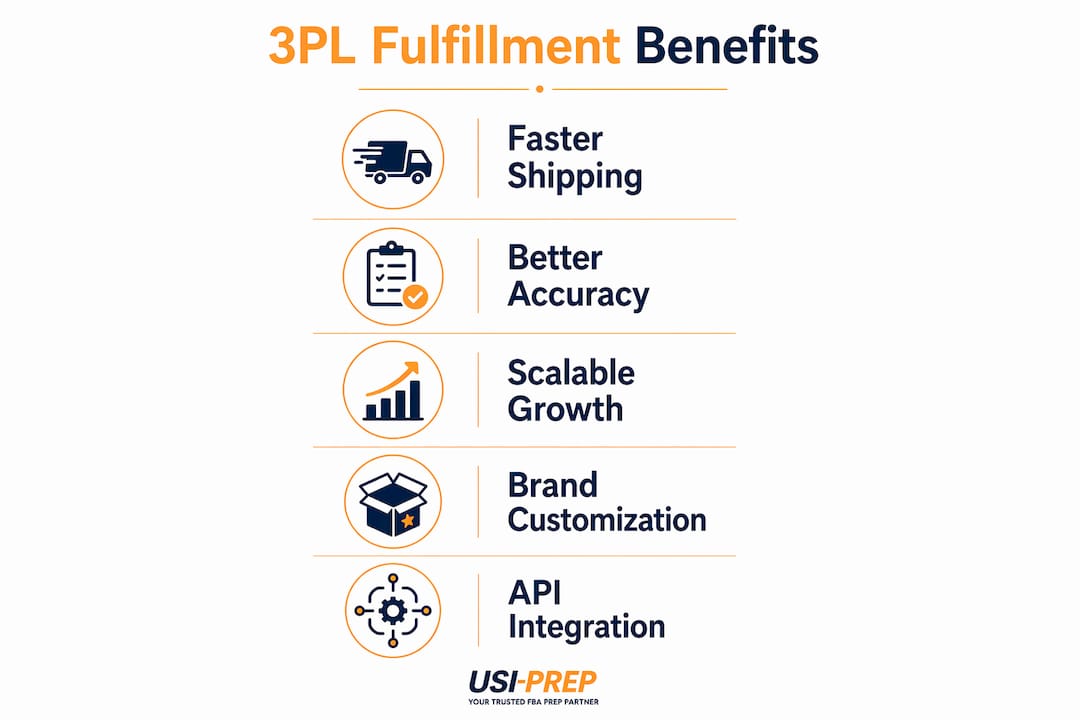
TikTok sellers have three fulfillment paths. Each has a different cost structure, control level, and growth ceiling.
Fulfilled by TikTok (FBT) is TikTok’s own warehousing and shipping program. FBT fees start at approximately $3.58 per item with 30 days of free storage included. The appeal is simplicity: you send inventory to TikTok’s warehouse and the platform handles the rest. The drawback is opacity. FBT fees are not fully itemized, and you cannot customize packaging or adjust fulfillment workflows. Your inventory is also locked inside TikTok’s system, which makes selling on other channels difficult.
In-house fulfillment gives you full control but at a high operational cost. You pay for warehouse space, packing materials, labor, and carrier accounts. Scaling requires hiring, which is slow and expensive. Most sellers outgrow in-house fulfillment before they realize it is holding them back.
| Model | Cost structure | Control level | Scalability | Shipping speed |
|---|---|---|---|---|
| FBT | Opaque, per-item fee from ~$3.58 | Low | Moderate | Fast |
| 3PL | Itemized: storage, pick-and-pack, shipping | High | High | Fast to very fast |
| In-house | Variable: labor, space, carriers | Full | Low | Depends on team |
3PL providers give brands the ability to customize packaging, adjust workflows, and sell across multiple channels, none of which FBT allows. For sellers focused on brand building and long-term growth, 3PL is the stronger model. FBT suits sellers who want simplicity at early stages and are comfortable with TikTok controlling their fulfillment experience.
What are the technical requirements for integrating a 3PL with TikTok Shop?
TikTok’s 2026 logistics rules set specific technical standards. Your 3PL must meet all of them to keep your account in good standing.
- API connectivity. Your 3PL’s warehouse management system (WMS) must connect to TikTok Shop’s logistics API. This connection handles order downloads, label generation, and tracking updates automatically. Approved ERPs and middleware enable 3PL systems to link directly with TikTok’s platform without manual data entry.
- TikTok-approved label generation. Labels must be purchased and generated through TikTok’s system, not through your 3PL’s carrier accounts. Your 3PL must support this workflow natively or through a middleware integration.
- Real-time tracking synchronization. Every carrier scan must push back to TikTok Shop in real time. Delays in tracking updates trigger account health warnings.
- Fee management outside buyer shipping. TikTok’s buyer-paid shipping does not cover your 3PL’s pick-and-pack, storage, or receiving fees. You absorb those costs separately. These additional fees include pick and pack, storage, receiving charges, and return processing on top of TikTok’s referral and processing fees.
- Non-compliance consequences. Sellers whose fulfillment systems do not meet TikTok’s API requirements face order processing failures, late dispatch penalties, and account suppression. The risk is not theoretical. TikTok actively monitors seller metrics and acts on violations.
How do you choose and implement the right 3PL?
Choosing a 3PL is a business decision with long-term consequences. The wrong provider costs you money, damages your account health, and frustrates your customers.
- Verify TikTok Shop integration. The 3PL must have documented, working API integration with TikTok Shop. Ask for a live demonstration, not just a sales claim.
- Check pricing transparency. Request a full fee schedule covering storage rates, pick-and-pack costs, receiving fees, return handling, and any minimum volume requirements. Use this to model your true cost per order.
- Assess fulfillment reliability. Ask for on-time dispatch rates and error rates from current clients. Usiprep, for instance, maintains a 98.9% on-time delivery rate, which is the kind of benchmark worth demanding from any provider you evaluate.
- Confirm scalability. Your 3PL must handle your peak volume, not just your average. Ask specifically how they manage viral order spikes and what their capacity ceiling is.
- Plan the onboarding process. A proper outsourced fulfillment setup includes inventory transfer, system integration testing, and a parallel-run period before going fully live. Skipping this step causes order failures at launch.
Pro Tip: Run a 30-day pilot with your 3PL before committing to a long-term contract. Track dispatch accuracy, tracking update speed, and error rates weekly. Real performance data beats any sales pitch.
After launch, monitor your TikTok Shop seller metrics weekly. Watch for late dispatch rates, tracking gaps, and return rates. These numbers tell you whether your 3PL is performing or quietly damaging your account health. Understanding how fulfillment costs affect margins is equally critical once you are live, because 3PL fees stack up fast without active cost management.
Key Takeaways
TikTok sellers who integrate a compliant 3PL gain faster shipping, cleaner account health, and the operational capacity to scale without rebuilding their fulfillment process from scratch.
| Point | Details |
|---|---|
| 3PL is now a compliance requirement | TikTok’s 2026 API mandate makes in-house or manual fulfillment non-compliant for most sellers. |
| FBT limits brand control | FBT fees start at ~$3.58 per item and lock inventory inside TikTok’s system, blocking multi-channel selling. |
| 3PL billing must be itemized | Predictable, line-item pricing for storage, pick-and-pack, and shipping is the only way to protect margins. |
| API integration is non-negotiable | Your 3PL must connect to TikTok’s logistics API for label generation and real-time tracking updates. |
| Pilot before committing | A 30-day test run reveals real performance data before you sign a long-term contract. |
What I have learned watching TikTok sellers get this wrong
The sellers I see struggle most with fulfillment are not the ones who chose the wrong carrier. They are the ones who waited too long to make a decision. They scaled their content, built an audience, and then discovered their fulfillment operation could not keep up with a single viral video. By the time they started evaluating 3PLs, they had already accumulated late dispatch penalties and damaged their account standing.
TikTok’s 2026 changes accelerated this problem. The end of Seller Shipping removed the last easy workaround. Sellers who were managing with a hybrid approach, buying their own labels and handling some orders in-house, suddenly had no compliant path forward without a proper API-connected 3PL.
What I find most underestimated is the brand impact. Customers on TikTok Shop are not forgiving about slow shipping or missing tracking updates. A bad fulfillment experience does not just cost you a sale. It costs you a review, a follower, and the algorithmic momentum you worked hard to build. The importance of 3PL for sellers goes beyond logistics. It is a brand protection decision.
The sellers who get this right treat their 3PL as a core part of their business, not a vendor they swap out when prices change. They invest in proper integration, monitor performance weekly, and build a relationship with their provider. That discipline is what separates brands that scale on TikTok from ones that plateau.
— Akbar
Usiprep’s fulfillment solutions for TikTok sellers
Usiprep was built by former Amazon sellers who know exactly what unreliable logistics costs a growing brand.
Usiprep offers fully itemized pricing, faster inventory check-ins, and complete visibility at every stage of the fulfillment process. The 98.9% on-time delivery rate and 30% average reduction in fulfillment costs are not marketing claims. They are the result of a system designed specifically for eCommerce brands that cannot afford fulfillment failures. If you are preparing inventory for TikTok Shop or any other channel, the 2026 FBA prep checklist is a practical starting point for getting your operation compliant and ready to scale. Usiprep’s team is ready to walk you through integration, onboarding, and cost modeling so you know exactly what to expect before your first shipment goes out.
FAQ
What is a 3PL and why do TikTok sellers need one?
A 3PL, or third-party logistics provider, handles warehousing, order picking, packing, and shipping on behalf of sellers. TikTok sellers need 3PL because TikTok’s 2026 API mandate requires API-connected fulfillment that most in-house operations cannot support.
How does 3PL differ from Fulfilled by TikTok?
FBT is TikTok’s own fulfillment program with fees starting at approximately $3.58 per item and limited brand control. A 3PL gives sellers itemized billing, custom packaging options, and the ability to fulfill orders across multiple sales channels.
What happens if my fulfillment system is not integrated with TikTok’s API?
Sellers without proper API integration face order processing failures, late dispatch penalties, and account suppression on TikTok Shop. Real-time tracking synchronization is a hard platform requirement as of 2026.
Can a 3PL handle viral order spikes on TikTok?
Yes. 3PL warehouses maintain the infrastructure and staffing capacity to process large order volumes quickly, which is exactly what in-house teams cannot do when a video goes viral overnight.
How do I evaluate whether a 3PL is right for my TikTok business?
Check for documented TikTok Shop API integration, fully itemized pricing, verified on-time dispatch rates, and scalability for peak volumes. Running a 30-day pilot before signing a long-term contract gives you real performance data to base your decision on.