
The ecommerce returns process is defined as the complete system that moves a customer’s return request from initiation through inspection, routing, and final refund or exchange. Every seller who ships products online faces this system daily. It covers return authorization, reverse logistics, condition grading, and settlement. Understanding how online returns work is not optional for growth. Apparel and footwear categories see 20–30% average return rates, while consumables average just 3–7%. That gap shows how much category type shapes your returns volume and cost exposure.
How does the ecommerce returns process work step by step?
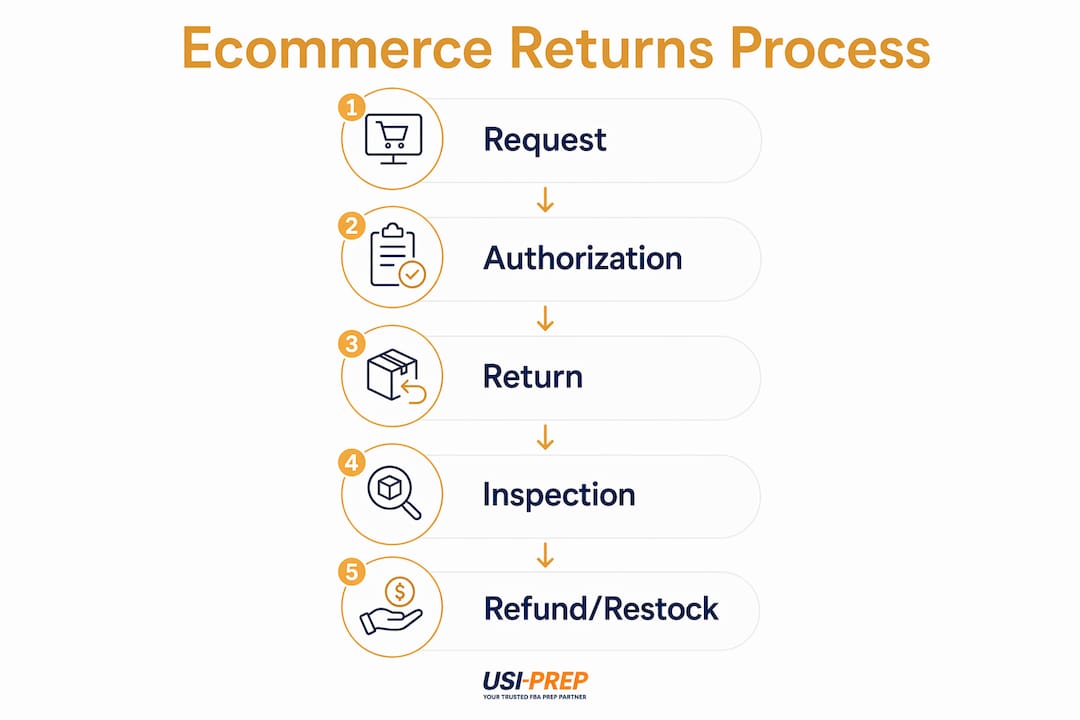
The returns process for online shopping follows eight distinct steps. Each step has a clear owner and a defined output. Skipping any step creates delays, refund errors, or inventory gaps.
-
Customer initiates the return. The buyer submits a request through your returns portal, email, or customer service channel. A clear portal reduces support tickets and captures structured data for every request.
-
Return Merchandise Authorization (RMA) issued. The RMA is a unique tracking number assigned to the return. An RMA system as a single source of truth prevents lost returns and refund errors by ensuring every item is authorized before it ships back.
-
Return shipping label generated. Your system sends the customer a prepaid label or instructions for a carrier drop-off. The label ties directly to the RMA so the package is traceable from the moment it leaves the buyer.
-
Item received and scanned at the warehouse. The warehouse logs the return against the open RMA. This scan triggers the inspection workflow and timestamps the receipt, which matters for refund timing.
-
Inspection and condition grading. Staff assess the item against a standardized grading framework. A Grade A to D grading system maximizes margin recovery by informing routing decisions before any refund is issued.
-
Routing decision made. Based on the grade, the item goes to one of four paths: restock, refurbish, liquidate, or dispose. This decision directly affects your recovery rate per returned unit.
-
Refund, exchange, or store credit issued. Refund processing averages 3–14 business days after item receipt, with an additional 5–7 days for card issuer posting. Store credit resolves immediately, which is why many sellers push it as the default option.
-
Inventory and financial systems updated. The loop closes when your warehouse management system and accounting records reflect the return. Accurate data here feeds sales forecasting and prevents phantom inventory.
Pro Tip: Separate the receipt scan from the final refund decision. Separating receipt from the refund decision prevents rushed or duplicate processing, protecting both margins and customer relationships.
How do ecommerce return policies shape the returns process?
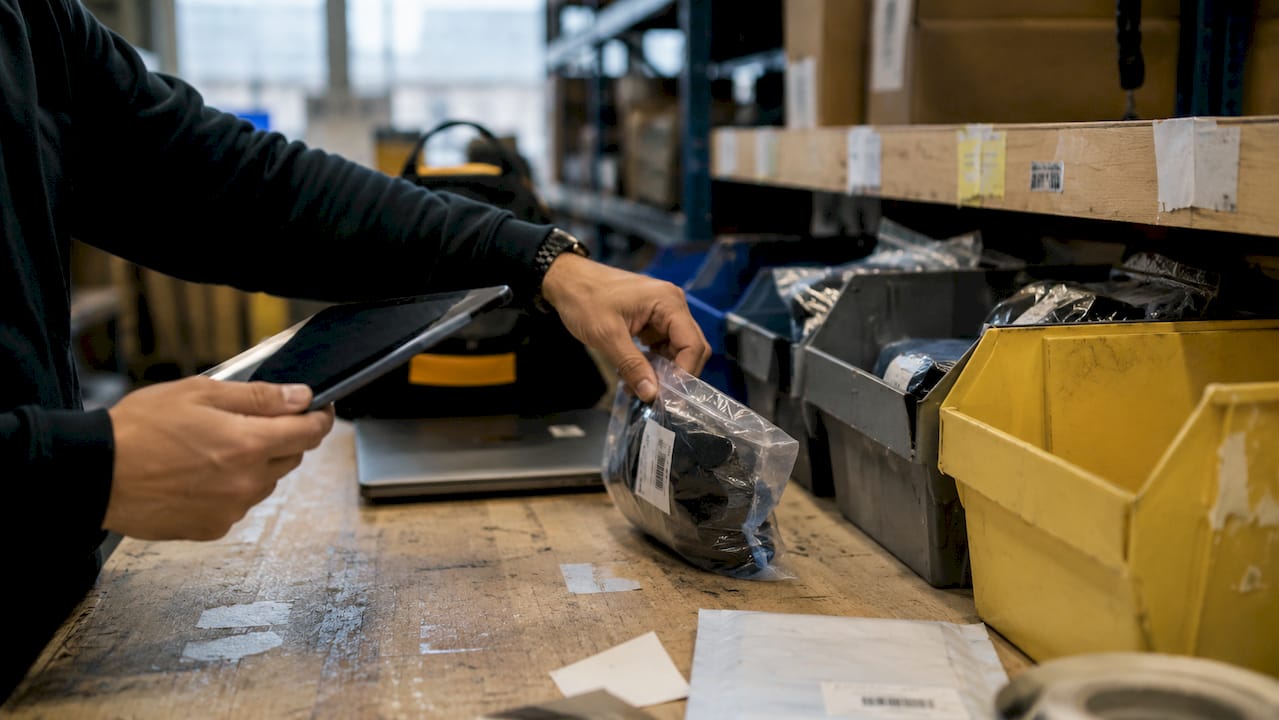
Your ecommerce return policy is not just a legal document. It is the rulebook that determines which returns enter your workflow and how they move through it.
The industry standard return window for most ecommerce categories is 30 days. Apparel and footwear brands increasingly extend this to 60–90 days to reduce friction and boost conversions. Longer windows do increase return volume, but they also reduce the urgency that drives impulsive returns.
Key policy decisions that shape your process:
- Return window length. Shorter windows reduce volume but can hurt conversion. Longer windows improve buyer confidence.
- Free vs. paid return shipping. Free return shipping increases conversion rates by 20–35% in high fit-uncertainty categories like apparel. Standard paid fees range from $3.99 to $8.50.
- Exchange-first routing. Directing customers toward an exchange before a refund converts 30–50% of refund requests into exchanges or store credit, retaining revenue.
- Condition requirements. Defining acceptable item conditions at the policy level reduces disputes during inspection.
- Non-returnable items. Listing excluded categories upfront cuts fraudulent or ineligible returns before they enter your warehouse.
“Well-structured return policies do more than support customers. They serve as anti-fraud mechanisms by defining firm eligibility criteria and enabling quick flagging of suspicious activity.” Signifyd
Clear policy communication also reduces abuse. When customers know the rules, they self-select out of ineligible returns. That keeps your inspection team focused on legitimate cases.
What operational challenges do ecommerce sellers face in managing returns?
Returns management is one of the highest-cost, lowest-visibility operations in ecommerce. Most sellers underestimate how quickly small inefficiencies compound into margin loss.
Common bottlenecks and how to address them:
- “Mystery box” returns without an RMA. Items that arrive without authorization clog receiving docks and delay processing. Enforce RMA requirements at the policy level and reject unauthorized shipments.
- Inspection delays causing refund bottlenecks. When inspection queues back up, refund timelines slip. Clear ownership of each transition phase between support, warehouse, and finance prevents these breakdowns.
- Free returns versus cost control. Free returns drive conversion but add direct cost. Segment your catalog and offer free returns only in categories where the conversion lift justifies the expense.
- Low-value returns eating logistics budgets. Returnless refunds for low-value items reduce logistics costs and maintain customer goodwill when shipping and inspection costs exceed product value.
- Disconnected systems. Returns data that does not flow into inventory and finance systems creates phantom stock and accounting errors. Integrate your returns platform with your warehouse management system and ERP.
- Fraud and serial returners. Return policies that define strict conditions allow teams to flag suspicious patterns. This is a direct operational benefit of a well-written ecommerce return policy.
Pro Tip: Use ecommerce order management software that tracks RMA status in real time. Visibility at every step cuts resolution time and reduces customer service escalations.
What is the difference between returns management and reverse logistics?
These two terms describe different functions. Sellers who conflate them end up with gaps in accountability and margin recovery.
Returns management is distinct from reverse logistics. Returns management covers the financial and customer experience side: authorization, communication, refund or exchange decisions, and policy enforcement. Reverse logistics covers the physical side: transportation of returned goods, warehouse receiving, inspection, and disposition.
| Function | Returns management | Reverse logistics |
|---|---|---|
| Primary focus | Customer experience and financial settlement | Physical movement and handling of goods |
| Key activities | RMA issuance, refund processing, exchange routing | Carrier pickup, warehouse receiving, grading, disposition |
| Success metric | Refund speed, customer satisfaction, fraud rate | Recovery rate, processing cost, routing accuracy |
| Tools used | Returns portals, CRM, order management systems | WMS, carrier integrations, grading software |
Distinguishing the two functions allows sellers to optimize each independently. Your customer service team owns returns management. Your warehouse team owns reverse logistics. When both have clear mandates, coordination improves and margin recovery increases.
Disposition options after inspection include restocking for resale, refurbishing for secondary markets, liquidating through bulk buyers, or disposing of unsalvageable units. Each path has a different recovery rate. Tracking disposition outcomes by product category reveals which items generate the most loss and informs sourcing decisions upstream.
How can strong returns workflows protect margins and build customer loyalty?
A returns process that frustrates customers costs you twice: once on the return itself, and again when that customer does not reorder. The sellers who treat returns as a retention tool outperform those who treat them as a cost center.
Practices that protect margins while improving the customer experience:
- Instant exchange programs. Ship the replacement before receiving the original item. Instant exchange programs see 40–60% higher uptake than standard exchanges. Require credit card authorization to cover non-return risk.
- Store credit incentives. Offer a bonus, such as 10% extra value, on store credit versus cash refund. This retains revenue and increases average order value on the next purchase.
- Standardized grading frameworks. Apply a consistent Grade A to D system across all returned items. Consistent grading reduces margin loss from misclassification and speeds routing decisions.
- Proactive status communication. Send automated updates at each stage: received, inspected, resolved. Customers who receive timely updates generate fewer support contacts and report higher satisfaction.
- Accurate inventory data. Every restocked return must update your live inventory count. Inaccurate counts lead to overselling, which creates new returns and damages trust.
Good ecommerce fulfillment practices integrate returns data directly into inventory planning. When your returns feed your forecasting model, you buy smarter and hold less dead stock.
Key Takeaways
A well-run ecommerce returns process requires clear authorization, standardized grading, defined routing, and tight integration between returns management and reverse logistics to protect margins and retain customers.
| Point | Details |
|---|---|
| RMA is non-negotiable | Every return needs an authorized tracking number before it enters your warehouse. |
| Policy drives process | Return window length, shipping fees, and condition rules determine which returns reach your team and how they flow. |
| Grading protects margins | A Grade A to D system standardizes inspection and maximizes recovery value per returned unit. |
| Separate the two functions | Returns management handles customers and finance; reverse logistics handles physical goods. Treat them as distinct operations. |
| Instant exchanges retain revenue | Exchange-first routing converts 30–50% of refund requests into retained revenue through exchanges or store credit. |
Why returns are the part of ecommerce most sellers get wrong
I have worked with enough ecommerce brands to know that returns are treated as an afterthought until they become a crisis. A seller builds a great product page, nails the ad spend, ships on time, and then loses the customer forever because the return took three weeks and required five emails.
The uncomfortable truth is that returns are a customer touchpoint, not a back-office function. The moment a buyer decides to return something, they are watching you. How fast you respond, how clear your instructions are, and how quickly you resolve the issue determines whether they order from you again.
The sellers I respect most treat their returns rate as a product quality signal. High returns in a specific SKU mean something is wrong with the listing, the product, or the packaging. They use that data to fix the upstream problem, not just manage the downstream cost.
Technology matters here, but process comes first. Automation cannot fix a workflow that has no clear ownership. Before you invest in returns software, map every handoff: who owns the RMA, who owns inspection, who owns the refund trigger. Once those are defined, automation accelerates what already works.
The brands that win long-term are the ones that make returning easy and use the data to get better. Returns are not a sign of failure. A chaotic returns process is.
— Akbar
How Usiprep helps ecommerce sellers handle returns and fulfillment
Usiprep was built by former Amazon sellers who understood that returns and fulfillment failures are margin killers. The team handles FBA prep, order fulfillment, and return processing with full visibility at every step.
Usiprep’s warehouse teams manage return receiving, inspection, grading, and relabeling so sellers do not have to build that infrastructure themselves. The result is faster resolution, lower per-unit processing costs, and accurate inventory data flowing back into your systems. Usiprep reports a 98.9% on-time delivery rate and a 30% reduction in fulfillment costs for many brands it serves. If returns and fulfillment costs are cutting into your margins, the FBA prep requirements checklist is a practical starting point. For a full picture of services and pricing, visit Usiprep’s fulfillment services.
FAQ
What is the standard return window for ecommerce?
The industry standard return window is 30 days for most ecommerce categories. Apparel and footwear brands increasingly use 60–90 day windows to improve conversion rates and reduce buyer friction.
How long does an ecommerce refund take to process?
Refund processing averages 3–14 business days after the item is received, with an additional 5–7 days for card issuers to post the credit. Store credit resolves immediately.
What is an RMA in the ecommerce returns process?
An RMA, or Return Merchandise Authorization, is a unique tracking number issued to authorize and track a return. It prevents lost returns and refund errors by ensuring every item is logged before it enters the warehouse.
What is the difference between returns management and reverse logistics?
Returns management covers authorization, customer communication, and refund or exchange decisions. Reverse logistics covers the physical transportation, inspection, and disposition of returned goods. Both functions must coordinate to maximize margin recovery.
Should ecommerce sellers offer free return shipping?
Free return shipping increases conversion rates by 20–35% in high fit-uncertainty categories like apparel. Sellers should weigh that conversion lift against the direct cost and apply free returns selectively by category.