
Storage fees are recurring charges that warehouses and third-party logistics providers bill for holding your inventory, calculated by space occupied, time stored, and product complexity. Knowing how to understand storage fees is the difference between a predictable cost structure and a monthly invoice that blindsides you. Most ecommerce sellers treat these fees as fixed overhead. They are not. They respond directly to how well you manage inventory velocity, contract terms, and product mix. This guide breaks down every billing model, cost driver, and contract trap you need to know.
How to understand storage fees: billing models and calculations
3PL storage fees fall into four standard billing models, and the one your warehouse uses determines everything about how your invoice is calculated.
Pallet position storage charges a flat monthly rate per pallet slot, typically $12–$35 per pallet per month. This model is predictable and works well for sellers with consistent, uniform inventory. Rack storage by cubic foot bills based on the actual volume your products occupy, with US averages running $0.40–$0.60 per cubic foot per month as of 2026. This model rewards dense, compact products and penalizes bulky, lightweight goods. Floor storage charges by square footage at $0.10–$0.25 per square foot per month, which suits oversized items that cannot be racked. SKU-based flat fees charge a fixed amount per unique product line regardless of volume, which hits sellers with large catalogs hardest.

How proration works in practice
Most warehouses prorate fees by day, multiplying the monthly rate by the number of units and the fraction of the billing period your inventory was present. A concrete example: 10 pallets stored at $20 per month for 15 days in a 30-day billing cycle generates a $100 charge, not $200. That math matters when you are receiving and shipping frequently.
The table below shows how the four models compare across key variables.
| Billing model | Typical rate | Best for | Risk |
|---|---|---|---|
| Pallet position | $12–$35/month per pallet | Uniform, standard-size inventory | Wasted space if pallets are not full |
| Rack (cubic foot) | $0.40–$0.60/cu ft/month | Dense, compact products | Expensive for bulky, light items |
| Floor storage | $0.10–$0.25/sq ft/month | Oversized or unstackable goods | Low density means high cost per unit |
| SKU flat fee | Varies by contract | Low-SKU, high-volume sellers | Costly for wide product catalogs |
Pro Tip: Ask your warehouse which billing model applies to each product category in your catalog. Some facilities mix models, charging pallet rates for racked goods and floor rates for oversized items on the same invoice.
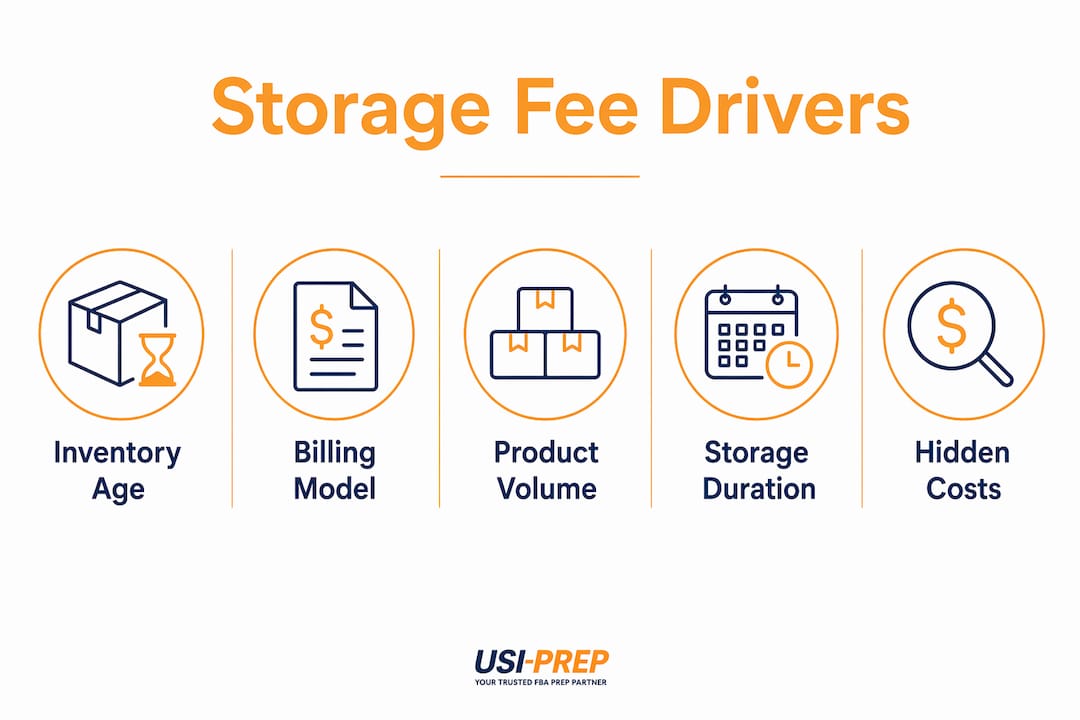
Which factors drive storage fees higher and how to control them
Inventory age is the single biggest cost multiplier in warehouse billing. Long-term storage fees activate after 181 days of storage, often at rates significantly above the standard monthly charge. A product sitting unsold for six months does not just stop generating revenue. It actively generates penalty fees on top of base storage costs.
Slow-moving stock is the root cause of most storage fee problems. Sellers who carry too many SKUs relative to their sales volume accumulate dead stock that occupies space and triggers aging surcharges. The fix is not always discounting. Sometimes it is stopping reorders on low-velocity products before the next shipment arrives.
Additional cost drivers to watch
Beyond base rates and aging fees, several surcharges inflate the final bill:
- Handling fees: Charged per inbound or outbound movement, these cover labor for receiving, put-away, and pick-and-pack. They are separate from storage and often overlooked in initial cost estimates.
- Climate control premiums: Temperature-sensitive products like cosmetics, supplements, or electronics components require specialized storage zones that carry a premium rate.
- Insurance surcharges: Some facilities charge separately for cargo insurance coverage, particularly for high-value goods.
- Administrative fees: Account setup, reporting, and system access fees appear on many 3PL invoices as line items that sellers never anticipated.
- Minimum monthly charges: Many warehouses set a floor on monthly billing regardless of how little inventory you hold. A slow month does not mean a low bill.
Hidden charges like these can increase total storage costs by 20% or more above the base rate. That gap between the quoted rate and the actual invoice is where most sellers get surprised.
Pro Tip: Build a simple spreadsheet that tracks each SKU’s days-in-storage alongside its sales velocity. Any product approaching 120 days without movement needs a clearance plan before the 181-day penalty threshold hits.
What hidden costs and contract pitfalls should sellers watch for?
The most expensive storage fee is the one you did not know you were agreeing to. Ambiguous contract terms around pallet size, billable cubic footage, and proration methods cause frequent billing disputes and unpredictable charges. A contract that says “pallet storage” without defining pallet dimensions leaves the warehouse free to bill for a 48×48-inch footprint even if your pallet is 40×48 inches.
Billing unit variability is a specific trap worth understanding. Warehouse billing definitions are not standardized across the industry. If your product overhangs pallet edges or if the facility uses volumetric pricing that rounds up to the nearest cubic foot, your actual charge can exceed your estimate by a meaningful margin. The contract must state exact dimensions and rounding rules.
“Successful sellers proactively negotiate clear terms defining billing units, proration, and surcharge triggers to avoid inflated and unpredictable invoices.”
Before signing any warehouse or fulfillment center agreement, request a sample invoice from a current client. A sample invoice shows every line item that appears in real billing, not just the headline rate on the rate card. It reveals handling fees, minimum charges, and surcharge categories that the sales conversation never mentioned.
Key contract terms to define before signing:
- Pallet dimensions: Exact length, width, and height limits that define one billable pallet unit.
- Cubic foot calculation method: Whether the facility bills on actual dimensions or rounds up to the nearest whole cubic foot.
- Proration method: Daily, weekly, or monthly proration and how partial periods are calculated.
- Surcharge triggers: Specific conditions that activate climate control, hazmat, or oversize fees.
- Free storage periods: Some facilities offer 30 days of free storage for new inventory. Get this in writing.
- Minimum monthly billing: The floor charge regardless of inventory volume.
Negotiating these terms upfront is not aggressive. It is standard practice for any seller moving meaningful volume through a 3PL.
How can ecommerce sellers reduce storage fees effectively?
The most effective way to cut storage costs is to move inventory faster, not to negotiate a lower per-pallet rate. Inventory velocity has a greater impact on total storage costs than small price reductions per pallet or cubic foot. A 10% reduction in your average days-in-storage saves more than a 10% rate discount on most billing models.
Here is a practical framework for reducing storage fees:
- Audit inventory velocity monthly. Rank every SKU by days-in-storage divided by units sold. Products in the bottom quartile are candidates for liquidation or discontinued reorders.
- Improve demand forecasting. Use 90-day rolling sales data to set reorder points that match actual sell-through rates. Ordering to a forecast rather than a gut feeling reduces overstock.
- Purge dead stock before penalty thresholds. Liquidate or donate products approaching the 181-day mark. The revenue loss from a clearance sale is almost always less than the long-term storage fee plus continued holding costs.
- Negotiate free storage windows for new shipments. Many warehouses will offer 15–30 days of free storage for new inventory arrivals. This gives you time to process and ship before billing starts.
- Choose the right billing model for your product type. If your products are dense and compact, rack-based cubic foot billing is cheaper than pallet position billing. Run the math before committing to a billing model.
- Use inventory restocking data to time shipments. Sending smaller, more frequent shipments reduces the average inventory level in the warehouse at any given time, which directly lowers storage charges.
Pro Tip: Negotiate a tiered rate structure where your per-pallet rate decreases as your monthly volume increases. This aligns the warehouse’s incentive to grow your business with your incentive to keep costs low.
Key takeaways
Storage fees are controllable costs, not fixed overhead. The sellers who pay the least are the ones who move inventory fastest, negotiate clear contracts, and audit their billing monthly.
| Point | Details |
|---|---|
| Four billing models exist | Pallet, cubic foot, floor space, and SKU flat fees each suit different inventory types. |
| Proration reduces partial-month charges | Daily proration means you only pay for the exact days your inventory occupies space. |
| Long-term fees activate at 181 days | Products stored beyond this threshold trigger penalty rates that compound quickly. |
| Hidden fees add 20% or more | Handling, insurance, and admin charges inflate the base rate on most 3PL invoices. |
| Velocity beats rate negotiation | Reducing days-in-storage saves more money than negotiating a lower per-unit rate. |
Storage fees as a supply chain report card
Most sellers I work with treat storage fees as a line item to minimize at contract time and then ignore. That is the wrong frame entirely. Storage fees reflect supply chain efficiency, not just rental costs. When fees spike, it usually means procurement and sales are out of sync. You bought more than you sold, or you bought it too early.
The sellers who manage storage costs best are not necessarily the ones with the lowest rates. They are the ones who treat a rising storage bill as a signal to investigate their buying patterns, not just a cost to absorb. I have seen brands cut their monthly storage spend by a third simply by tightening their reorder cadence, without renegotiating a single contract term.
The other mistake I see constantly is over-indexing on rate negotiation while ignoring contract clarity. A seller who spends three hours negotiating a $2 reduction per pallet and then signs a contract with undefined pallet dimensions will almost certainly lose more than $2 per pallet in billing disputes within the first quarter. Get the definitions right first. Then negotiate the rate.
My practical recommendation: review your storage invoices line by line every month for the first three months with any new warehouse partner. You will find charges you did not expect. Address them immediately, get the contract amended, and your billing will stabilize. Sellers who skip this step pay for it for years.
— Akbar
Usiprep’s approach to keeping storage fees low
Ecommerce sellers who work with Usiprep benefit from a fulfillment process built specifically to reduce the time inventory spends in storage. Usiprep was founded by former Amazon sellers who understood that slow prep and unclear processes are the real drivers of high storage costs.

Usiprep’s FBA prep and order fulfillment services include fast inventory check-ins, transparent billing, and a 98.9% on-time delivery rate that keeps products moving rather than sitting. Sellers using Usiprep report an average 30% reduction in fulfillment costs. Start with the FBA prep requirements checklist to see exactly how a faster prep process reduces your storage exposure from day one. For a full view of fulfillment cost components, Usiprep’s resources cover every fee category in plain language.
FAQ
What are storage fees in a 3PL warehouse?
Storage fees are charges a third-party logistics provider bills for holding your inventory in their facility. They are calculated based on space occupied (pallets, cubic feet, or square footage), time stored, and any special handling requirements.
How are storage fees calculated?
Most warehouses calculate storage fees by multiplying the applicable rate by the number of billing units and the fraction of the billing period your inventory was present. For example, 10 pallets at $20 per month stored for 15 of 30 days generates a $100 charge.
When do long-term storage fees kick in?
Long-term storage fees typically activate after 181 days of continuous storage. Products held beyond this threshold are billed at a higher penalty rate on top of the standard monthly charge.
What hidden fees should I look for in a storage contract?
Hidden charges include handling fees, climate control premiums, insurance surcharges, administrative fees, and minimum monthly billing floors. These extras can add 20% or more to the base storage rate.
What is the fastest way to reduce storage fees?
Improving inventory velocity reduces storage fees faster than negotiating lower rates. Auditing slow-moving SKUs, tightening reorder points, and liquidating products before the 181-day threshold are the highest-impact actions a seller can take.