
A warehouse in ecommerce is the operational engine that connects inventory intake to final-mile delivery, making it far more than a storage room. Every order you ship passes through a series of tightly coordinated steps: receiving, picking, packing, and shipping. When those steps work well, customers get their orders fast and accurate. When they break down, you pay for it in returns, complaints, and lost repeat business. Understanding the role of warehouse in ecommerce is the first step toward building a fulfillment operation that actually scales.
How ecommerce warehouses drive fulfillment speed and accuracy
An ecommerce warehouse, also called an ecommerce fulfillment center, is purpose-built for speed and order accuracy. Traditional warehouses prioritize storage volume. Ecommerce fulfillment centers optimize picking speed per SKU, which is a fundamentally different design goal. That distinction shapes everything from shelf layout to staffing to the software you run.
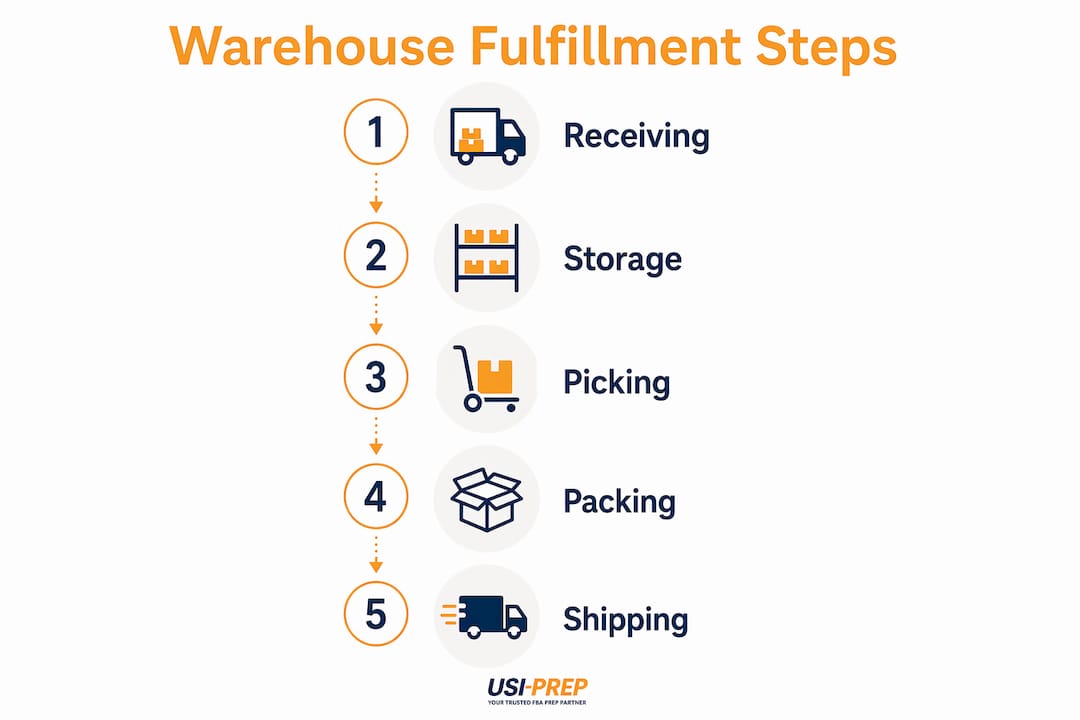
The order cycle in a fulfillment center follows four stages:
- Receiving: Inventory arrives and gets logged into the system with quantity checks and condition notes.
- Picking: A staff member or automated system retrieves the correct item from its bin location.
- Packing: The item gets packaged with the right materials, labels, and inserts.
- Shipping: The parcel moves to a carrier and tracking information goes to the customer.
Each stage is a potential failure point. Professional fulfillment models report order accuracy rates as high as 99.8%. That number is only achievable when every stage runs on a defined, repeatable process rather than memory or guesswork.
Pro Tip: Map your current order cycle on paper before investing in any software. Identifying where delays or errors actually occur tells you exactly where to focus first.
Real-time inventory visibility is what separates a reactive warehouse from a proactive one. When your system knows exactly how many units sit in each bin, you can prevent overselling, catch discrepancies early, and give customers accurate delivery estimates. Without it, you are reacting to problems after they have already cost you money.
What technologies power modern ecommerce warehousing?
Technology is what turns a warehouse into a true fulfillment center. The right tools reduce errors, speed up throughput, and give you the data to make better decisions.
-
Warehouse Management System (WMS): A WMS acts as the operational air traffic controller, routing orders, directing staff, and tracking every item from receiving to shipping. Without one, businesses rely on error-prone spreadsheets that cause stock-outs and inflate operational overhead. Experts describe a WMS as the primary engine for profitability, not just an inventory tracker.
-
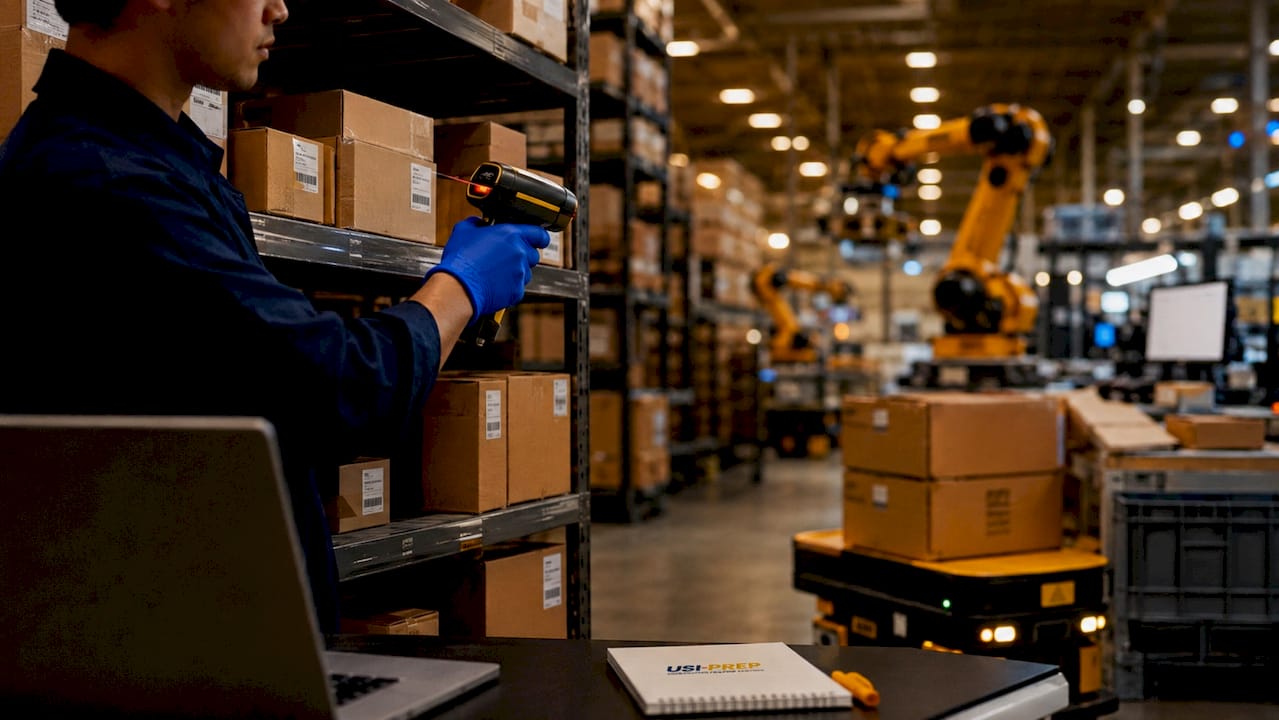
Barcode scanning and RFID: Scanning bin locations, SKUs, and orders before packing prevents costly mistakes, especially in warehouses where products share similar names, colors, or sizes. RFID goes further by tracking items without line-of-sight scanning, which speeds up receiving and cycle counts.
-
Mobile devices for warehouse staff: Handheld scanners and tablets give pickers guided workflows in real time. Staff follow step-by-step instructions on screen rather than relying on printed pick lists or memory. Error rates drop significantly when the system tells you exactly where to go and what to grab.
-
Robotics and sorting systems: Automated picking robots and conveyor-based sorting systems handle high-volume, repetitive tasks faster than any human team. These tools make sense once your daily order volume justifies the capital investment.
-
Platform integration: Your WMS must connect directly to your ecommerce platform and order management system. When a customer places an order on your store, it should flow into the warehouse system automatically, with no manual data entry required.
A WMS-driven operation reduces order processing time by 15–25% and cuts last-mile shipping costs by 10–15%. Those savings free up your customer service, finance, and merchandising teams from chasing down manual errors.
How do you scale warehouse operations as your business grows?
Scaling warehouse operations is not just about adding more shelf space. It requires rethinking your entire fulfillment model as order volume grows.
Most small ecommerce businesses start with in-house fulfillment from a garage, spare room, or small rented space. That works until it does not. The signal to change is when fulfillment errors increase, shipping times slip, or you are spending more time packing boxes than growing your business.
The transition to a professional fulfillment model, whether a dedicated warehouse or a third-party logistics provider (3PL), follows a clear logic. You trade fixed overhead for variable costs tied to actual order volume. That shift protects cash flow during slow seasons and removes the ceiling on growth during peak periods. Understanding 3PL versus self-fulfillment is a decision worth making carefully, because the wrong choice at the wrong time is expensive to reverse.
Hybrid fulfillment models, where you keep some inventory in-house and route the rest through a 3PL, are increasingly common. They offer flexibility but carry a real risk. Hybrid fulfillment strategies require integrated systems to avoid fragmented inventory that causes lost sales and a degraded customer experience. If your in-house system and your 3PL system do not share real-time data, you will oversell, understock, and frustrate customers.
Key principles for scaling warehouse operations:
- Prioritize integrated inventory visibility across every fulfillment node before adding new locations.
- Optimize your warehouse layout around high-frequency pick zones. Items that ship most often belong closest to the packing station.
- Standardize your receiving process so every inbound shipment gets logged consistently, regardless of who handles it.
- Review your SKU count regularly. Dead stock consumes space and labor that could serve your best sellers.
Pro Tip: Before signing a 3PL contract, audit the provider’s WMS capabilities. A 3PL without real-time inventory reporting will create the same visibility problems you were trying to solve.
Warehouse layout deserves specific attention. Ecommerce fulfillment centers optimize for short travel paths and high-frequency pick zones, which directly reduces labor costs and throughput bottlenecks. A layout designed for storage volume, not picking speed, will cost you hours of labor every week.
How does warehouse management affect cost and customer satisfaction?
Efficient warehouse management in ecommerce has a direct, measurable impact on both your bottom line and your customer relationships. The two are more connected than most sellers realize.
Fulfillment errors are expensive in multiple ways. A wrong item shipped means a return, a replacement, and a customer who may not come back. Accurate inventory prevents overselling, which is one of the fastest ways to damage your brand reputation on any marketplace. A WMS enforces rigid workflows for receiving, slotting, picking, and packing that eliminate the tribal knowledge and spreadsheet dependency that cause these errors.
| Warehouse problem | Direct cost | Customer impact |
|---|---|---|
| Picking errors | Return shipping, replacement cost | Negative reviews, lost trust |
| Stock-outs | Lost sale, potential marketplace penalty | Order cancellation, competitor switch |
| Slow processing | Expedited shipping fees | Late delivery, complaint |
| Poor receiving | Inventory discrepancies, recount labor | Overselling, delayed fulfillment |
Faster fulfillment supports delivery promises like same-day or next-day shipping, which are now baseline expectations for many buyers. Meeting those promises consistently builds the kind of customer trust that drives repeat purchases. Missing them, even once, can cost you a review score that takes months to recover.
Labor efficiency is the other major lever. Optimized pick paths, guided workflows, and accurate slotting reduce the time each order takes to process. That means more orders per labor hour, which directly lowers your per-unit fulfillment cost. For sellers managing tight margins, that efficiency is not optional. It is the difference between a profitable operation and one that bleeds money on every shipment.
Key Takeaways
Ecommerce warehouse management is the single most controllable factor in fulfillment cost, delivery speed, and order accuracy for growing sellers.
| Point | Details |
|---|---|
| Warehouses are operational hubs | Ecommerce fulfillment centers prioritize picking speed per SKU, not storage volume. |
| WMS drives profitability | A Warehouse Management System reduces order processing time by 15–25% and cuts shipping costs by 10–15%. |
| Hybrid models need integration | Combining in-house and 3PL fulfillment only works when both systems share real-time inventory data. |
| Layout affects labor cost | High-frequency pick zones and short travel paths reduce labor hours per order. |
| Errors compound quickly | Picking mistakes, stock-outs, and slow receiving each carry direct costs and lasting customer impact. |
What I have learned about warehouse operations the hard way
The most common mistake I see ecommerce sellers make is treating their WMS as a secondary tool they will “get to eventually.” They invest in marketing, product development, and platform fees, then run their warehouse on spreadsheets and memory. That works until order volume hits a threshold where one bad week wipes out a month of profit margin.
The uncomfortable truth is that WMS adoption transforms operations from memory-based to data-driven execution. Most sellers who resist it do so because they underestimate how much tribal knowledge is holding their operation together. When a key staff member leaves, that knowledge walks out the door with them.
Automation is another area where I see sellers misjudge the timing. Robotics and conveyor systems make sense at scale. At lower volumes, the capital cost outweighs the labor savings. The right sequence is: standardize your processes first, then automate the standardized process. Automating a broken workflow just produces errors faster.
The sellers who scale well share one habit. They maintain clean, integrated data flows between their ecommerce platform, their WMS, and their shipping carriers. When those three systems talk to each other in real time, you can make decisions based on facts. When they do not, you are always one inventory discrepancy away from a customer service crisis.
— Akbar
Usiprep helps ecommerce sellers get fulfillment right
Usiprep was built by former Amazon sellers who experienced firsthand how unreliable logistics erodes margins and brand trust. The company offers FBA prep and order fulfillment services designed specifically for ecommerce brands that need speed, accuracy, and full visibility into every step of the process.

Usiprep reports a 98.9% on-time delivery rate and a 30% reduction in fulfillment costs for many of the brands it serves. For sellers preparing Amazon shipments, the FBA prep requirements checklist is a practical starting point to reduce errors and speed up inventory check-ins. If you are evaluating whether your current warehouse setup is costing you more than it should, Usiprep’s transparent pricing and fast check-in process make it worth a direct comparison.
FAQ
What is the role of a warehouse in ecommerce?
An ecommerce warehouse is the operational link between inventory intake and final-mile delivery. It handles receiving, picking, packing, and shipping to fulfill customer orders accurately and on time.
How does a WMS improve ecommerce fulfillment?
A Warehouse Management System automates order routing, guides staff through pick-and-pack workflows, and provides real-time inventory visibility. It reduces order processing time by 15–25% and cuts last-mile shipping costs by 10–15%.
When should an ecommerce business move to a 3PL?
The right time to move to a third-party logistics provider is when fulfillment errors increase, shipping times slip, or warehouse management is consuming time that should go toward business growth.
What is the difference between a warehouse and a fulfillment center?
A traditional warehouse prioritizes storage volume, while an ecommerce fulfillment center is designed around picking speed per SKU, with layouts and workflows built for high-velocity order cycles.
How does warehouse accuracy affect customer satisfaction?
Picking errors lead to returns, replacements, and negative reviews. Professional fulfillment models achieve order accuracy rates as high as 99.8%, which directly supports customer trust and repeat purchase rates.