
Hidden fulfillment fees are undisclosed charges buried in third-party logistics (3PL) contracts that inflate your actual costs well beyond the quoted per-order rate. Common hidden fees in fulfillment contracts include receiving surcharges, dimensional weight penalties, long-term storage escalators, and packaging markups averaging 15% to 25% above base material cost. For eCommerce entrepreneurs operating on thin margins, these charges are not minor line items. They are profit killers that compound quietly across every shipment, every pallet, and every invoice cycle.
1. Receiving and inbound handling fees
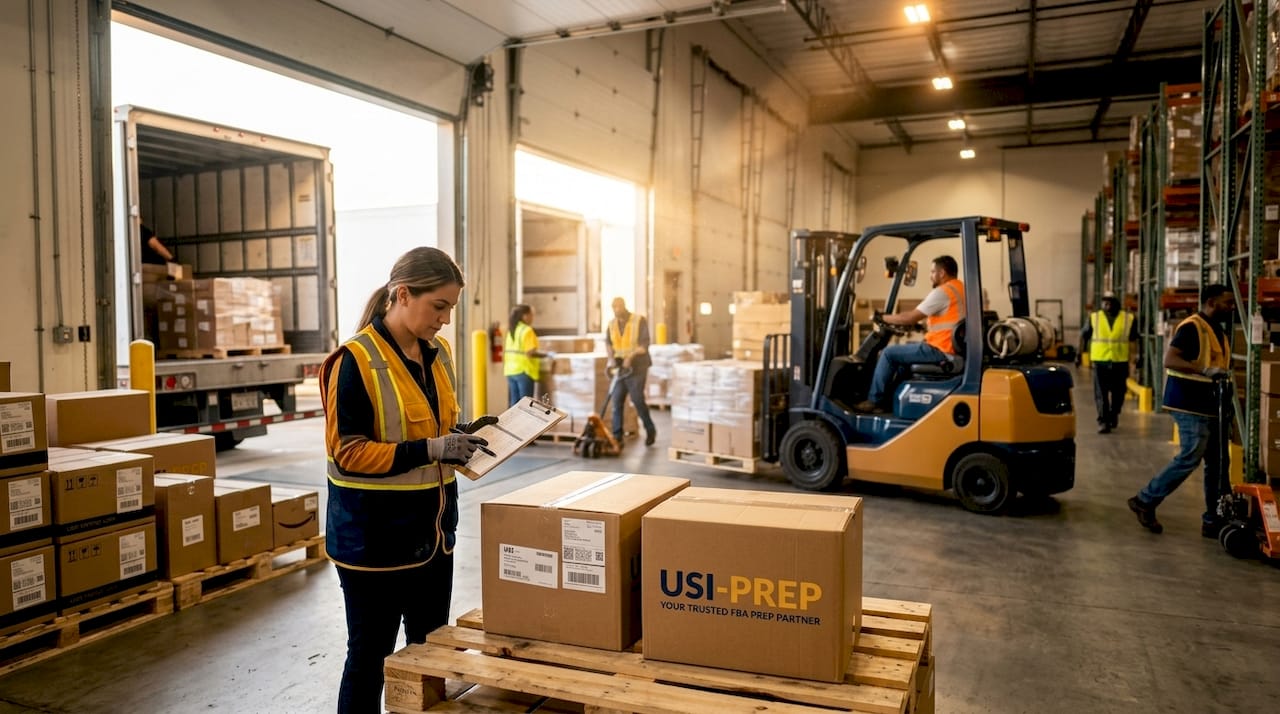
Receiving fees are charged when your inventory arrives at the fulfillment center, and they vary more than most contracts make obvious. Receiving fees run $25 to $50 per pallet or $2 to $5 per carton, depending on how the shipment arrives. Floor-loaded containers, where product is stacked loose rather than palletized, trigger additional labor fees that can double the inbound cost.
The practical trap here is that your supplier’s shipping method determines your receiving bill. If your manufacturer ships floor-loaded containers to save on freight, your 3PL charges you extra labor to unload them. Negotiate a receiving fee cap in your contract, and specify that floor-load surcharges must be disclosed in writing before any shipment is processed.
2. Storage fees and pallet billing inefficiencies
Storage fees are billed either per pallet or per cubic foot, and the billing method matters enormously for your cost structure. Pallet-based storage billing inflates costs by 40% to 60% when pallets are not fully utilized. Cubic-foot billing at roughly $0.46 per cubic foot is more cost-effective for partial pallet loads, but most 3PLs default to pallet billing because it generates higher revenue.
Ask your provider which billing method they use and request a comparison calculation based on your actual inventory profile. If you regularly hold partial pallets, push for cubic-foot pricing or a hybrid model. This single negotiation point can reduce your monthly storage bill by hundreds of dollars.
3. Pick and pack fees with packaging markups
Pick and pack fees appear straightforward on the surface: a base fee per order plus a per-item charge. The hidden cost is in the packaging materials. Packaging materials are marked up 15% to 25% above the provider’s actual cost, and that markup applies to every box, poly bag, and void fill used in your orders.
On high-volume accounts, this markup compounds fast. A business shipping 5,000 orders per month with $0.80 in average packaging material cost pays an extra $600 to $1,000 monthly just from the markup alone. Request an itemized packaging cost schedule before signing, and ask whether you can supply your own branded materials to bypass the markup entirely.
Pro Tip: Ask your 3PL for a sample invoice before you sign the contract. If they cannot produce one with line-item packaging costs broken out, that is a red flag for billing opacity.
4. Shipping and carrier surcharges
Carrier surcharges are passed through from FedEx, UPS, and USPS to your 3PL, and then passed through again to you, sometimes with an additional markup layered on top. Fuel surcharges add 10% to 15% on top of base shipping costs and fluctuate weekly based on published fuel indexes. Residential delivery surcharges, delivery area surcharges for rural ZIP codes, and peak season fees from October through January add further charges that most contracts bury in an exhibit or addendum.
The residential delivery surcharge alone from major carriers runs $4 to $6 per package in 2026. If your customer base skews residential, this fee affects nearly every order you ship. Require your contract to list all carrier surcharge categories explicitly, and ask whether the 3PL marks up pass-through carrier fees or bills them at cost.
5. Dimensional weight pricing and its real cost
Dimensional weight, commonly called DIM weight, is calculated as length times width times height divided by a DIM factor of 139 for domestic shipments. Carriers bill based on whichever is greater: actual weight or DIM weight. A lightweight product in a large box pays the DIM weight rate, not the actual weight rate.
DIM weight surcharges add $0.50 to $3.00 per order when package dimensions exceed standard carrier tiers. The compounding problem is that 3PLs often choose box sizes based on warehouse efficiency rather than your shipping cost. A product that fits in a 10x8x4 box shipped in a 12x10x6 box pays a meaningfully higher DIM rate on every single order.
| Scenario | Box Size | DIM Weight | Actual Weight | Billed Weight |
|---|---|---|---|---|
| Optimized packaging | 10 x 8 x 4 in | 2.3 lbs | 1.5 lbs | 2.3 lbs |
| Oversized packaging | 12 x 10 x 6 in | 5.2 lbs | 1.5 lbs | 5.2 lbs |
| Cost difference per order | ~$1.50 to $2.50 more |
Pro Tip: Quarterly cartonization audits with photos verify whether your 3PL is using the smallest viable box for each SKU. Request this audit in writing as a contract deliverable, not just a verbal agreement.
6. Long-term storage fees and inventory aging penalties
Long-term storage fees are the slow drain that catches most eCommerce sellers off guard. Standard storage rates apply for the first 30 days, then escalate sharply. Long-term storage fees escalate 1.5x to 3x after inventory ages past the 30 to 90 day threshold, depending on the provider’s contract terms.
The escalation math is stark. A standard rate of $25 per pallet becomes $37.50 at 30 days, $50 at 60 days, and $75 at 90 days. For a seller holding 20 pallets of slow-moving inventory, that progression adds $1,000 per month in fees that were not visible in the original quote.
| Aging Threshold | Standard Rate | Escalated Rate | Increase |
|---|---|---|---|
| 0 to 30 days | $25/pallet | $25/pallet | 0% |
| 31 to 60 days | $25/pallet | $37.50/pallet | 50% |
| 61 to 90 days | $25/pallet | $50/pallet | 100% |
| 90+ days | $25/pallet | $75/pallet | 200% |
Contract language around aging methods matters just as much as the rates. FIFO (first in, first out) aging assigns the oldest inventory age to outbound orders, which keeps your average inventory age lower. Aggregate aging assigns the average age of all units to every pallet, which can trigger long-term fees even on recently received stock. Always confirm which method your contract uses before signing.
7. Tech, setup, and monthly account management fees
Warehouse management system (WMS) access fees, onboarding fees, and monthly account management charges are standard hidden charges in contracts that rarely appear in initial pricing conversations. Setup fees range from $250 to $1,500 depending on the provider and the complexity of your SKU catalog. Monthly WMS access fees of $50 to $200 per month are often listed in a technology addendum rather than the main pricing schedule.
Data integration fees for connecting your Shopify store, Amazon Seller Central account, or other sales channels to the 3PL’s WMS add another layer of cost. Some providers charge per integration, others charge per API call volume. Require a complete technology fee schedule as part of your contract review, and confirm whether these fees are fixed or usage-based.
8. Recurring price escalators and automatic contract renewals
77% of fulfillment providers increase pricing annually by 3% to 7%, and most contracts include this escalator in a clause that few sellers read carefully. On a $10,000 monthly fulfillment spend, a 5% annual escalator adds $500 per month by year two and $1,050 per month by year three. The compound effect over a three-year contract is significant.
Auto-renewal and evergreen clauses extend contracts automatically unless you provide written notice 60 to 90 days before the renewal date. Miss that window and you are locked in for another full term at the escalated rate. Use an AI contract analysis tool like Silk Data to flag these clauses before you sign. Negotiate a cap on annual escalators at 3% maximum, and require 30-day written notice for any fee change outside the scheduled escalator.
- Request itemized billing with every invoice, not just a total charge
- Negotiate explicit audit rights so you can verify billing accuracy at any time
- Cap annual price escalators at 3% in writing
- Require 60-day notice before any automatic renewal takes effect
- Confirm shrinkage allowance terms: shrinkage allowances range from 0.5% to 2%, but some providers set them as high as 4%, meaning they absorb no liability for lost inventory up to that threshold
Pro Tip: Most 3PL invoices contain 3% to 5% billing errors, nearly always in the provider’s favor. Build a monthly invoice audit into your operations calendar and compare every line item against your contract rate card.
9. Minimum billing guarantees and volume penalties
Minimum monthly billing guarantees require you to pay a floor amount regardless of your actual order volume. A contract with a $2,000 monthly minimum means you pay $2,000 even in a month where you ship $800 worth of orders. For seasonal businesses or brands in growth phases, this clause destroys unit economics during low-volume periods.
Volume penalty clauses work in the opposite direction. If you exceed a contracted volume ceiling, some providers charge overage rates that are higher than your standard rate. Review your fulfillment cost components carefully to understand both the floor and the ceiling before committing to any volume-based contract structure. Negotiate minimums tied to a rolling three-month average rather than a monthly floor to smooth out seasonal swings.
Key takeaways
Hidden fulfillment fees compound across receiving, storage, packaging, shipping, and contract terms to inflate your total cost well above the quoted per-order rate, and identifying them before signing is the only reliable way to protect your margins.
| Point | Details |
|---|---|
| Packaging markups add up fast | Packaging materials are marked up 15% to 25%, costing high-volume sellers hundreds extra per month. |
| DIM weight is a silent cost driver | Oversized boxes can more than double the billed shipping weight, adding $1.50 to $2.50 per order. |
| Storage fees escalate sharply | Long-term storage rates can reach 3x the standard rate after 90 days of inventory aging. |
| Contract escalators compound | A 5% annual increase on a $10,000 monthly spend adds over $1,000 extra per month by year three. |
| Audit rights protect your margins | Most 3PL invoices contain 3% to 5% billing errors, making regular line-item audits non-negotiable. |
What I’ve learned after years of reviewing fulfillment contracts
The most expensive mistake I see eCommerce sellers make is treating the per-order rate as the total cost. It never is. The per-order rate is the entry price. The real cost lives in the storage aging schedule, the packaging markup, the DIM billing method, and the escalator clause buried on page 11 of the addendum.
I have reviewed contracts where the headline rate looked competitive but the total landed cost per order was 35% higher than a provider charging more upfront with transparent billing. The cheapest per-order rate often hides higher total costs when you factor in storage inefficiencies and carrier markups. That pattern repeats constantly.
The fix is not complicated, but it requires discipline. Build a fulfillment cost accrual model in a spreadsheet before you sign anything. Map every fee category from the contract to a projected monthly cost based on your actual volume and inventory profile. Then benchmark those costs against current market rates annually. Providers know most sellers never do this, which is exactly why the fees stay hidden.
Align your fulfillment partner’s incentives with your goals. A provider who benefits from you holding more inventory longer has no reason to flag your aging stock. A provider with transparent, flat-rate storage and no escalators is structurally motivated to help you move product efficiently. That alignment is worth more than a lower headline rate.
— Akbar
How Usiprep helps you avoid fulfillment fee surprises
Usiprep was founded by former Amazon sellers who experienced exactly these billing problems firsthand. The company built its fulfillment model around complete cost visibility, with itemized invoicing, no packaging markups, and flat storage rates that do not escalate with inventory age. Usiprep clients see a 30% reduction in fulfillment costs on average, driven largely by eliminating the hidden charges described in this article.
If you sell on Amazon, start with the FBA prep requirements checklist to understand exactly what compliance and packaging costs should look like before you compare any provider’s contract. For a full breakdown of what transparent fulfillment pricing looks like in practice, review Usiprep’s pricing page and compare it line by line against your current contract.
FAQ
What are hidden fulfillment fees in a 3PL contract?
Hidden fulfillment fees are charges not disclosed in the headline pricing of a 3PL contract, including receiving surcharges, packaging markups, DIM weight penalties, long-term storage escalators, and minimum billing guarantees. They inflate total fulfillment costs well beyond the quoted per-order rate.
How do I identify hidden fees in a fulfillment contract?
Request a sample invoice with full line-item detail before signing, and map every fee category in the contract to a projected monthly cost based on your actual volume. An AI contract review tool like Silk Data can flag buried clauses like auto-renewals and escalators automatically.
What is a typical packaging markup in fulfillment contracts?
Packaging material markups average 15% to 25% above the provider’s actual material cost. On high-volume accounts, this adds hundreds to over a thousand dollars per month in charges that do not appear in the base per-order rate.
How does dimensional weight pricing affect my shipping costs?
DIM weight is calculated as length times width times height divided by 139, and carriers bill whichever is greater: actual or DIM weight. Oversized packaging can increase your billed shipping weight by more than double, adding $0.50 to $3.00 per order in additional carrier charges.
Can I negotiate hidden fees out of a fulfillment contract?
Yes. Cap annual price escalators at 3%, require itemized billing and audit rights, negotiate cubic-foot storage billing for partial pallets, and push for zero-shrinkage clauses or a maximum 0.5% shrinkage allowance. Review fulfillment center features to know which terms are standard and which are negotiable before entering any contract discussion.