
Outsourced order fulfillment is defined as partnering with a third-party logistics provider (3PL) to handle your warehousing, picking, packing, and shipping operations. To set up outsourced order fulfillment correctly, you need more than a signed contract. You need a technology integration plan, a phased inventory transfer, and a clear SLA. 57% of eCommerce companies outsource some or all fulfillment to scale without fixed cost burdens. That number tells you this is now standard practice, not a shortcut.
What are the prerequisites before outsourcing order fulfillment?
Not every brand is ready to outsource fulfillment today. Getting this wrong costs more than doing it yourself.
Order volume and SKU complexity
Most 3PLs become cost-effective for brands shipping more than 200–500 orders per month. Below that threshold, per-unit fees often exceed what you’d pay managing fulfillment in-house. SKU complexity matters just as much. A brand with 10 SKUs and predictable dimensions is far easier to onboard than one with 200 SKUs, fragile items, and custom kitting requirements. Know your numbers before you start any conversation with a 3PL.
Technology requirements you must confirm first
Native, direct API integration between your store platform and the 3PL’s warehouse management system (WMS) is the gold standard for real-time inventory and order sync. Middleware solutions like Zapier-based connectors introduce lag and failure points. Before signing anything, confirm your 3PL supports direct connectors for Shopify, Amazon, or whichever platform you sell on. Top WMS platforms in 2026 include Extensiv, SkuVault Core, and Hopstack, all of which offer native Shopify and Amazon integrations.
Documents and agreements to prepare before onboarding
Before your first conversation with a 3PL, have these ready:
- A complete SKU catalog with dimensions, weights, and fragility notes
- Your average daily and monthly order volume for the past 6 months
- Packaging specifications and any custom insert or branding requirements
- Return handling expectations and your current return rate
- A list of your top 20% SKUs by sales volume (you’ll need this for the inventory transfer phase)
Having this information ready signals to a 3PL that you’re a serious partner. It also speeds up the quoting and onboarding process by weeks.
How do you choose and vet the right 3pl partner?
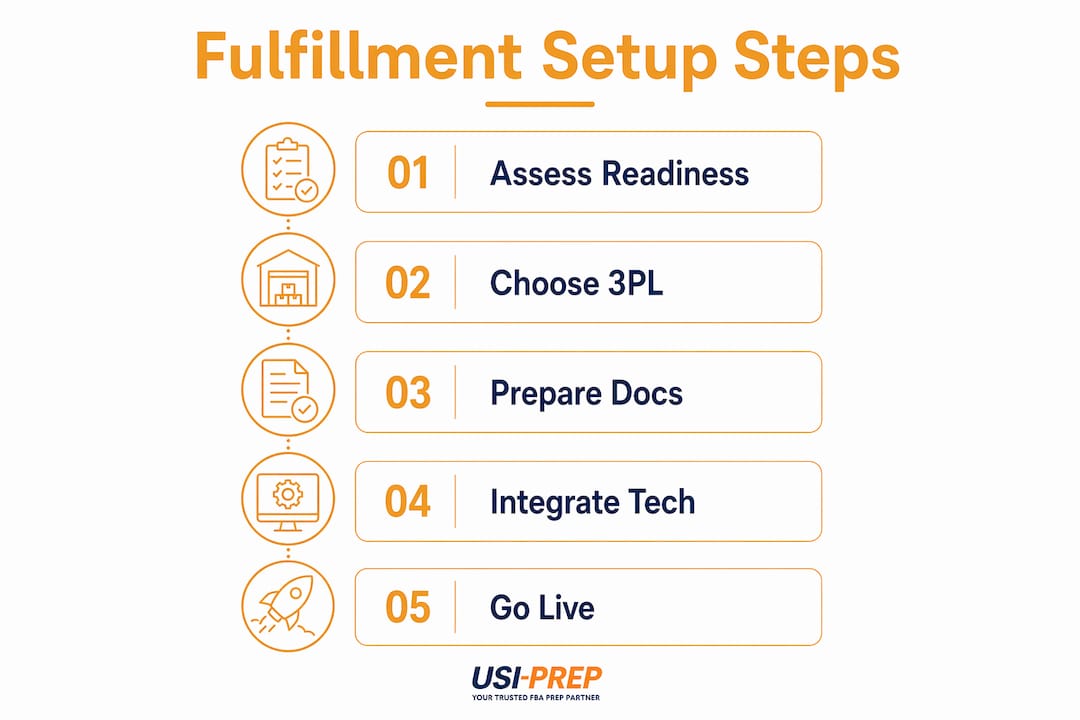
Choosing a 3PL is not a vendor decision. It’s an operational decision that affects every customer order you ship.

What to compare across 3pl providers
| Criteria | What to Look For |
|---|---|
| Pricing model | Per-order fees vs. storage plus pick-and-pack; watch for minimum monthly charges |
| Contract terms | Month-to-month vs. annual; exit clauses and notice periods |
| SLA guarantees | Written error rate commitments and on-time shipping percentages |
| Tech stack | Native WMS integrations with Shopify, Amazon, and your returns platform |
| Liability terms | Coverage limits on lost or damaged inventory |
Negotiate written SLA terms specifying pick error rates below 0.5% and explicit remedies for failures. A 3PL that won’t commit to error rate guarantees in writing is telling you something important about their confidence in their own operations.
Pro Tip: Request an on-site visit or a video walkthrough of the warehouse before signing. How a facility looks and how staff communicate during that visit tells you more than any sales deck.
Reference checks are non-negotiable. Ask for two or three current clients in your product category and call them. Ask specifically about how the 3PL handles mistakes, not just how they perform on normal days. You can also review fulfillment center features side by side before committing to any contract.
Step-by-step: how to set up your fulfillment integration and go live
This is where most brands lose time and money. Follow a structured process and you’ll avoid the most common failures.
The go-live sequence
- Connect your sales platform via API. Link Shopify or Amazon to the 3PL’s WMS using a native integration. Request a sandbox environment first and test order scenarios including cancellations, address changes, and returns before any live orders flow through.
- Map your SKUs in the WMS. Upload your full SKU catalog with barcodes, dimensions, and shipping rules. Confirm that every SKU maps correctly to the right product in your store.
- Transfer your top SKUs first. Start your initial inventory transfer with the top 20% of SKUs responsible for 80% of your order volume. This limits your exposure to receiving errors during the most vulnerable phase of onboarding.
- Run parallel operations for 10–14 days. Parallel operations with 5–20% of orders routed to the 3PL reveal integration bugs and packing errors before they affect your full customer base. This step is not optional if you care about your brand reputation.
- Cut over fully and monitor KPIs daily. Once parallel operations confirm accuracy, shift all orders to the 3PL. Track order accuracy rate, on-time shipping rate, and inventory discrepancy rate every day for the first 90 days.
Kpis to track in your first 90 days
| KPI | Target Benchmark |
|---|---|
| Order accuracy rate | 99.5% or higher |
| On-time shipping rate | 98% or higher |
| Inventory discrepancy rate | Below 0.5% |
| Returns processing time | 24–48 hours to resale-ready |
Pro Tip: Set up a shared dashboard or weekly reporting cadence with your 3PL from day one. Waiting until something breaks to ask for data puts you in a reactive position you don’t want to be in.
What are the most common 3pl onboarding challenges?
Even well-planned onboarding hits friction. Knowing what to expect lets you fix problems before they become patterns.
Integration and operational errors
The most common early failures are order sync delays, incorrect packing slips, and shipping label errors. These usually trace back to incomplete SKU mapping or untested edge cases in the API connection. Running a sandbox test before go-live catches most of these. If you skipped that step, expect to spend your first two weeks firefighting.
Communication and escalation gaps
Many brands set up a 3PL and then go quiet, checking in only when something goes wrong. Brands that treat logistics as an active partnership achieve faster deliveries, lower costs, and more reliable fulfillment. Establish a weekly ops review call for the first 90 days. Assign a named point of contact on both sides with clear escalation paths for urgent issues.
The brands that struggle most with 3PL onboarding are the ones that hand off operations and disappear. Fulfillment is a shared responsibility, not a delegation.
Returns handling and contractual traps
Best-in-class returns operations turn returned inventory back to resale-ready within 24–48 hours, compared to the industry average of 7–10 days. That gap directly affects your cash flow and inventory availability. When reviewing contracts, pay close attention to hidden fees in fulfillment contracts like long-term storage charges, minimum monthly fees, and account setup costs that don’t appear in the initial quote.
Standard 3PL contracts cap liability at the cost of goods, which means you may recover only a fraction of your loss on high-value inventory. Negotiate higher liability coverage or carry your own cargo insurance for your most valuable SKUs.
Key takeaways
Successful outsourced order fulfillment requires direct API integration, a phased inventory transfer, parallel operations testing, and active ongoing management from day one.
| Point | Details |
|---|---|
| Confirm volume readiness | Outsourcing becomes cost-effective at 200–500 orders per month; below that, in-house may cost less. |
| Require native API integration | Direct WMS connections via Extensiv or SkuVault Core outperform middleware for accuracy and speed. |
| Start with top SKUs | Transfer your top 20% SKUs first to limit receiving errors during the most critical onboarding phase. |
| Run parallel operations | Route 5–20% of orders through the 3PL for 10–14 days before full cutover to catch errors early. |
| Negotiate SLA terms in writing | Demand pick error rates below 0.5% and explicit remedies; never accept verbal commitments. |
What i’ve learned after watching brands get 3pl onboarding wrong
I’ve seen brands treat 3PL onboarding like flipping a switch. They sign a contract, ship their inventory, and expect orders to flow perfectly from day one. That almost never happens.
The brands that succeed treat this process with the same rigor they’d apply to migrating their entire eCommerce platform. That means documented SKU data, tested API connections, staged inventory transfers, and weekly ops reviews for at least the first three months. Transitioning to a data-driven partnership where the 3PL’s technology stack functions as an extension of your business is what separates brands that scale from brands that scramble.
The other thing most articles won’t tell you: your first 3PL probably won’t be your last. As your volume grows and your SKU mix changes, your requirements change too. Build contracts with exit clauses. Keep your SKU data and integration documentation clean and portable. The brands that stay agile are the ones that treat every fulfillment relationship as a partnership worth managing, not a problem worth forgetting.
Direct API integration is no longer optional for brands serious about scaling. It’s the baseline. If a 3PL can’t offer it, move on.
— Akbar
How Usiprep makes fulfillment setup faster and more reliable
Setting up outsourced fulfillment is complex, but you don’t have to figure it out alone. Usiprep was founded by former Amazon sellers who understand exactly where the process breaks down, from inventory check-in delays to opaque pricing and missed SLAs.
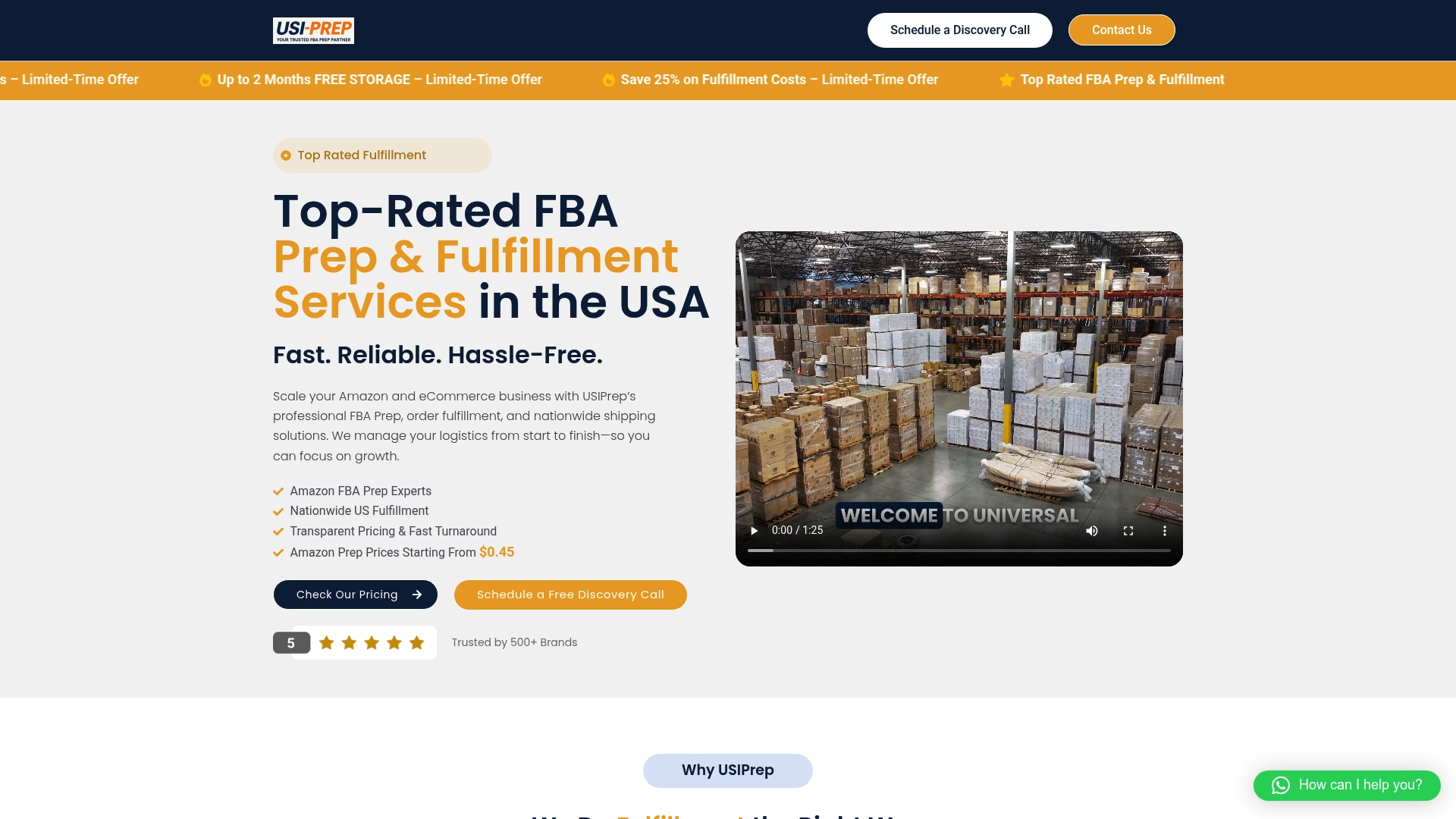
Usiprep delivers a 98.9% on-time delivery rate and has helped brands cut fulfillment cost components by up to 30%. Whether you’re preparing your first FBA shipment or transitioning from in-house fulfillment, the FBA prep requirements checklist gives you a step-by-step framework to get inventory ready and compliant fast. Explore Usiprep’s services and see what transparent, founder-built fulfillment actually looks like.
FAQ
What order volume do i need to outsource fulfillment?
Most 3PLs become cost-effective at 200–500 orders per month. Below that threshold, per-unit fees often exceed the cost of managing fulfillment in-house.
What is the best technology setup for 3pl integration?
Native API integration between your store platform and the 3PL’s WMS is the gold standard. Platforms like Extensiv, SkuVault Core, and Hopstack offer direct Shopify and Amazon connectors that sync inventory and orders in real time.
How long does 3pl onboarding typically take?
Most brands complete the full onboarding process in 3–6 weeks, including SKU mapping, API testing, inventory transfer, and the 10–14 day parallel operations phase before full cutover.
What should i watch for in a 3pl contract?
Review liability caps, minimum monthly fees, long-term storage charges, and exit clause terms. Standard contracts cap liability at cost of goods, which may not cover losses on high-value inventory.
What are the main benefits of outsourcing order fulfillment?
The core benefits of outsourced fulfillment are lower fixed costs, faster shipping, and the ability to scale order volume without adding warehouse staff or infrastructure. Brands also gain access to carrier rate discounts and professional WMS technology they couldn’t justify buying independently.