
Picking an FBA prep and fulfillment partner that matches both volume and compliance needs often leads to wasted time and hidden costs. Many competitors require high order minimums, hidden fees, or ignore small brands with inflexible pricing and undisclosed network coverage. This comparison spotlights five providers so you can select an FBA prep service with the right mix of scale, transparency, and geographic reach.
Table of contents
Usiprep
At a glance
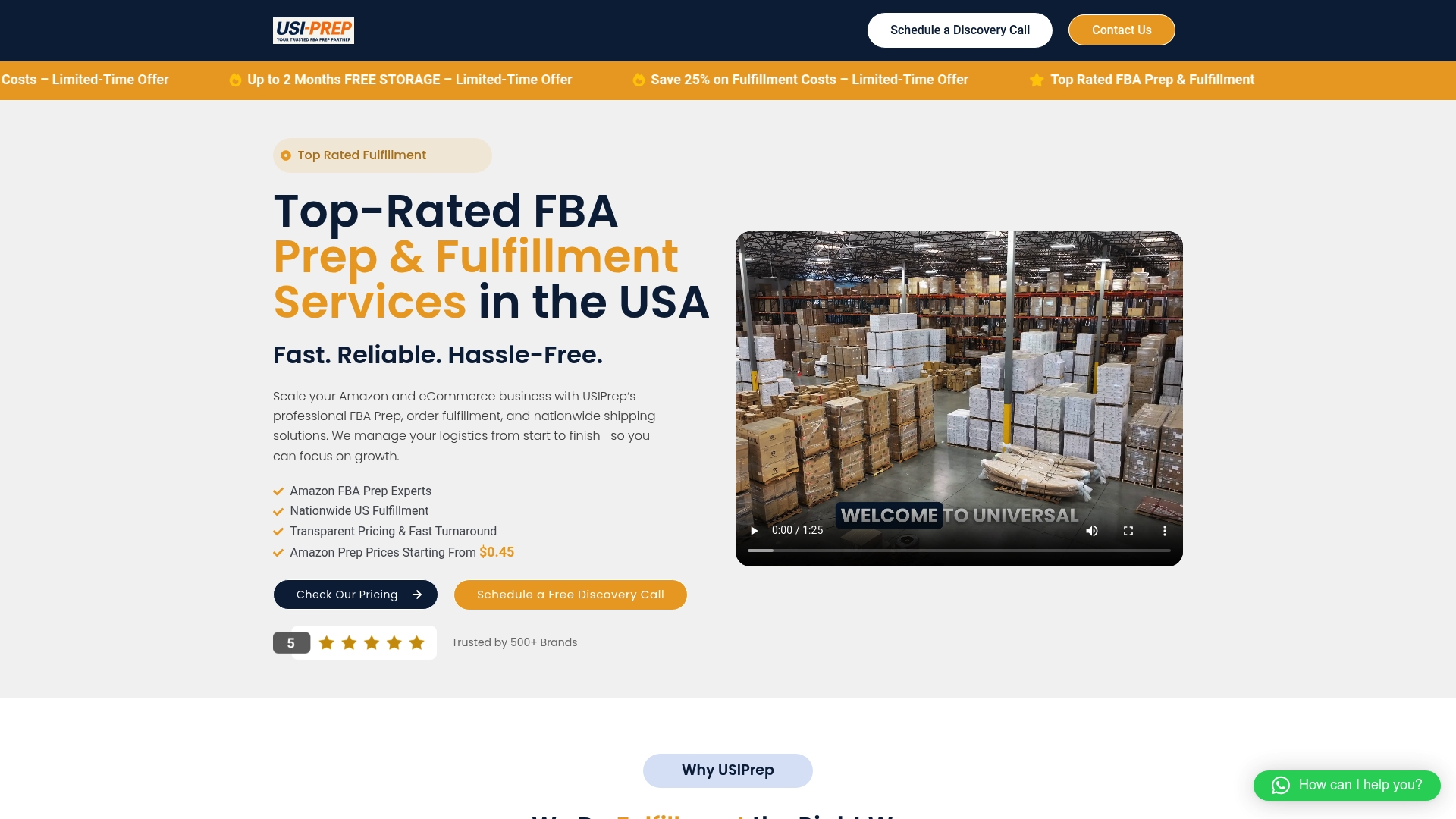
According to the company, USIPrep reports a 98.9% on-time delivery rate. The company also reports a 30% reduction in fulfillment costs for many brands.
The vendor advertises being trusted by over 500 brands. USIPrep focuses on FBA prep, order fulfillment, and nationwide shipping with fast turnaround times and transparent, itemized pricing.
Core features
- FBA prep including labeling, kitting, bundling, and quality checks. These tasks meet Amazon compliance and reduce inbound rejections.
- Nationwide US fulfillment and international shipping that support brands scaling beyond single-market sales.
- Transparent, itemized pricing with no hidden fees to help forecast per-unit costs.
- Fast turnaround times with order processing in 24 to 72 hours for standard workflows.
- Direct warehouse communication for custom requirements and special packing or labeling requests.
Key differentiator
USIPrep’s team traces back to former Amazon sellers who built their workflows around Amazon rules and real seller problems. That background shows up in their compliance checks, labeling accuracy, and handling of inbound shipments. The company highlights transparent pricing and operational clarity to reduce surprises for sellers.
Pros
-
Built by experienced sellers who know Amazon’s requirements. That makes prep and labeling less likely to trigger inbound holds.
-
Transparent pricing and itemized fees that simplify per-unit cost comparisons. You see line items for labeling, kitting, and storage.
-
Supports both domestic and international fulfillment, which helps brands expanding into new markets. Use the same partner for cross-border shipments when possible.
-
Fast order handling reduces time on receipt and speeds inventory to Amazon or direct orders. Faster check-ins help maintain available inventory.
Cons
- Pricing varies by order volume and customization, which can make direct price comparisons hard for very small brands.
Notable integrations
- Amazon Seller Central
- Shopify
- WooCommerce
- eBay
- Walmart Marketplace
- Magento
Who it’s for
USIPrep fits growing Amazon and ecommerce brands that want to outsource prep and fulfillment instead of building in-house operations. It works well for sellers planning national expansion or testing international markets. Choose USIPrep if you need Amazon-compliant labeling, kitting, and faster inventory check-ins.
Unique value proposition
Starting at $0.45 per unit for basic prep services, USIPrep aims to lower per-unit costs while keeping compliance. That price point combined with fast processing reduces carrying costs and inbound delays. For sellers who want clear line-item billing and vendor-grade warehouse communication, USIPrep converts logistics work into predictable expenses.
Real world use case
A mid-sized Amazon seller moves all FBA prep and labeling to USIPrep to cut labor overhead. The seller reduces inbound errors and receives consolidated shipping paperwork for Amazon. This frees the seller to focus on sourcing and listing optimization rather than daily warehouse tasks.
Pricing
Base prep starts at $0.45 per unit for standard services. Additional logistics, storage, and custom handling carry variable fees. The vendor provides custom quotes based on order volume and specific service needs.
Website: https://usiprep.com
MyFBAPrep
At a glance
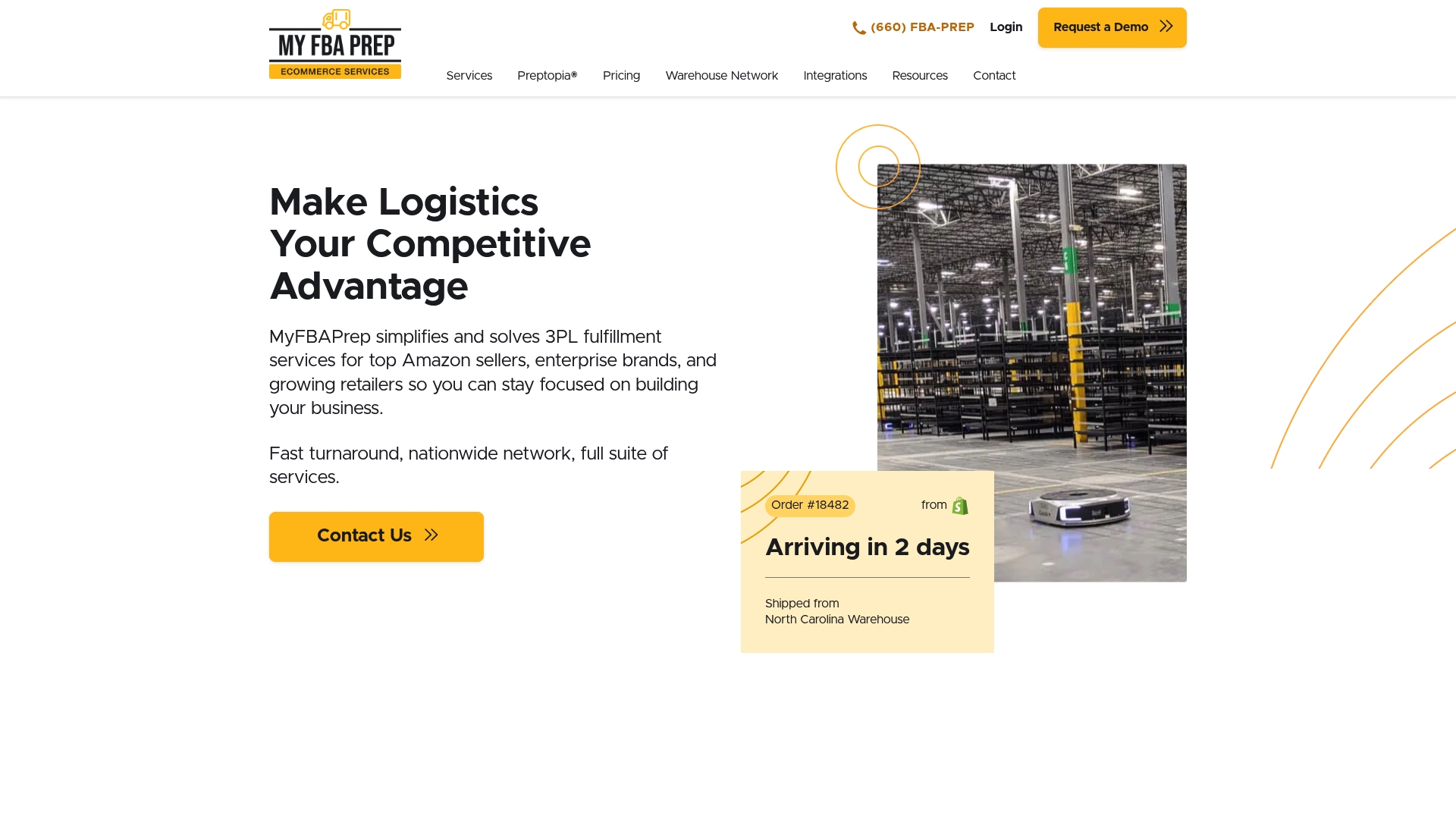
MyFBAPrep requires a minimum engagement of 15,000 units/month, which makes its offering aimed squarely at high-volume sellers. The company pairs that scale with a broad warehouse footprint across North America, Europe, and the UK. Their platform and account teams target multi-channel operations where volume and geographic reach matter.
Core features
- Amazon FBA prep, DTC fulfillment, and retail/b2b fulfillment. Full set of inbound prep, labeling, and shipment staging for Amazon and other channels.
- Nationwide warehouse network. More than 50 facilities across multiple countries for regional inbound and outbound moves.
- Preptopia® for real-time tracking. Inventory visibility, order status, and direct warehouse messaging inside a single system.
- Customization and value-added services. Co-packing, branding, temperature-controlled options at select sites, and customs clearance support.
- Dedicated account management. A named contact handles operations, reporting, and exception handling.
Key differentiator
MyFBAPrep centers on network scale and hands-on account support. Its advantage is the combination of a distributed warehouse footprint and a single tracking layer that ties those sites together. That setup works best for brands moving tens of thousands of units and needing regional placement for retail or FBA. Compared with Usiprep, MyFBAPrep targets larger, multi-country logistics flows rather than the lower-volume FBA prep and rapid check-in focus that Usiprep emphasizes.
Pros
- The vendor reports 24–72 hour SLAs for turnaround on common prep tasks, which suits sellers that need predictable inbound timing.
- Extensive multi-country footprint reduces transit times to regional fulfillment centers and retail locations.
- Preptopia® centralizes inventory and order status, cutting the number of places you must check for exceptions.
- Dedicated account managers with Amazon and brand experience simplify escalation and account setup for complex flows.
- A broad service menu means you can add kitting, bundling, or customs work without moving to a second provider.
Cons
- The 15,000 units/month minimum excludes many small sellers and startups.
- Pricing is volume and service dependent, which makes initial budgeting harder without a quote.
- Cold storage and other specialized warehousing are available only at select locations, not across the entire network.
- Some buyers report that setup depends heavily on integrations and clear communication, so initial onboarding can take work.
When it may not fit
Do not choose MyFBAPrep if you ship under 15,000 units per month. If your business needs simple, low-volume FBA prep with transparent per-unit pricing, the vendor’s volume model will likely add complexity. Also avoid the service if every SKU needs cold storage at every site since temperature control is limited by geography.
Notable integrations
MyFBAPrep integrates with Amazon Seller Central and Shopify for direct inbound routing and order flow. The company also supports ERP integrations and common order management tools such as ShipStation and Linnworks. Those connections make multi-channel reconciliation and automated routing possible for larger catalogs.
Who it’s for
This service fits established eCommerce brands, Amazon high-volume sellers, and retailers that need regional placement and multi-site fulfillment. Choose it when you operate many SKUs, need co-packing or customs support, and can meet the minimum volume threshold. It works best for teams that want a single partner for both FBA prep and retail replenishment.
Real world use case
According to the company, a rapidly growing Amazon seller cut FBA prep lead time from 10 days to 2 by moving to MyFBAPrep’s network and workflows. That change let the seller replenish multiple FBA destinations faster and scale SKU counts across North America. The example shows how regional warehousing plus a single tracking system can accelerate operations for high-volume accounts.
Pricing
Pricing is variable and quoted based on volume, service mix, and geographic needs. Expect per-unit and per-service pricing tied to your monthly throughput and any customization. Contact the vendor for a tailored quote and an estimated rate card for your SKU profile.
Website: https://myfbaprep.com
AMZ prep
At a glance
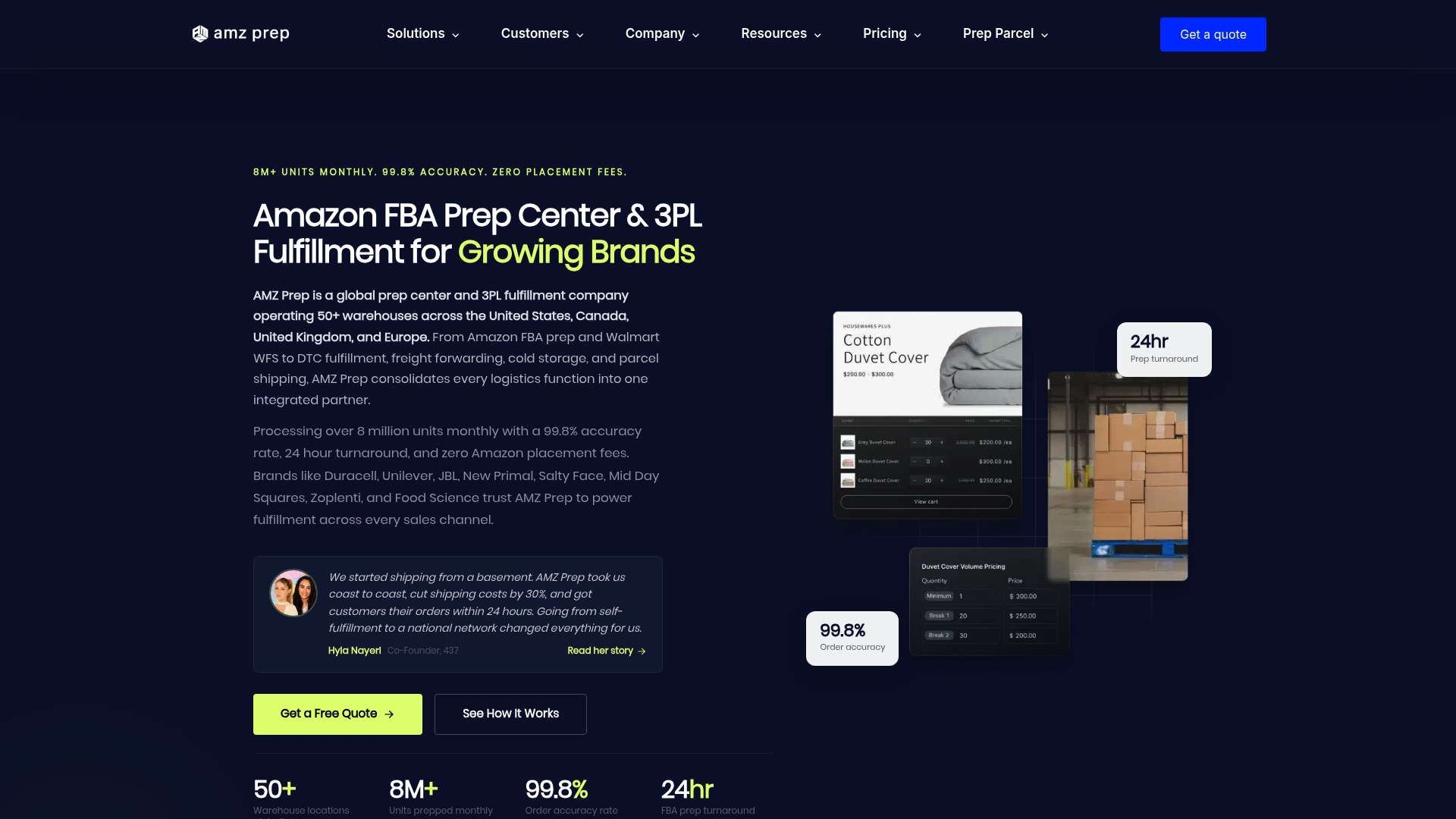
AMZ Prep reports processing over 8 million units monthly and a 99.8% accuracy rate. That figure comes from the vendor’s marketing materials. The platform pairs a global warehouse network with an API-driven fulfillment stack aimed at sellers who need both FBA prep and multichannel order routing.
Core features
AMZ Prep combines FBA prep and shipment creation with multichannel DTC order fulfillment through a single platform. The service includes cold storage in FDA registered facilities and international freight forwarding with customs support. Its proprietary tools include Prep Parcel for carrier routing and AI smart cartonization to cut packaging cost and wasted space. The platform exposes API and EDI endpoints for order, inventory, and tracking sync across channels.
Key differentiator
AMZ Prep’s key differentiator is its ecommerce focus combined with a wide warehouse footprint and a delivery model that advertises zero FBA placement fees. The vendor claims enterprise scale while keeping onboarding flexible with no long term contracts. That orientation makes it a match for brands that want a technology-first 3PL rather than a traditional warehouse provider.
Pros
-
Built for ecommerce operations with proprietary automation and API access. This reduces manual handoffs between marketplaces and the warehouse.
-
Fast processing and accuracy, according to the company. The same accuracy claim above underpins fewer inventory exceptions and returns.
-
Global warehouse network across North America, Europe, and the UK. That network helps reduce transit time for international and domestic orders.
-
No setup fees or long term commitments for many clients. That policy lowers the barrier to test their fulfillment and tech stack.
-
Multi channel support for Shopify, Seller Central, and marketplaces plus multicarrier shipping options. You can centralize order routing and rate optimization.
Cons
-
The platform works best at scale. The vendor suggests clients move at least 300 units per month to unlock advanced automation.
-
Public pricing is limited and requires a tailored quote. That slows quick budget comparisons for small teams.
-
Strong ecommerce focus leaves limited fit for traditional brick and mortar distribution. Companies centered on wholesale pallet flows may find gaps.
-
International logistics complexity may demand internal resources to coordinate customs and duties for some routes.
When it may not fit
AMZ Prep may not fit small sellers shipping fewer than 300 units per month. Sellers that prefer a fixed rate card rather than a bespoke quote should look elsewhere. Also consider other providers if you need a warehousing partner focused on large palletized retail programs instead of ecommerce packs.
Notable integrations
AMZ Prep integrates with marketplace and storefront platforms including Amazon MWS and Seller Central, Shopify, WooCommerce, BigCommerce, and Magento. It also supports Walmart, Etsy, TikTok Shop, Target, Costco, Nordstrom, and eBay. Regional carriers connect through the Prep Parcel API and EDI links for label and rate automation.
Who it’s for
This product fits growing ecommerce brands that need an API driven fulfillment platform with global reach. It suits teams that want to move FBA prep, DTC orders, and cross border freight under one vendor. It also works for brands ready to invest in integration and volume to gain efficiency.
Real world use case
A mid sized supplement brand used AMZ Prep to handle FBA prep, international freight, and DTC fulfillment. The brand reported lower landed cost and faster delivery after switching fulfillment lanes and using the platform’s cartonization logic. That result came with tighter visibility across channels through API feeds.
Pricing
AMZ Prep uses an all inclusive flat rate per item for FBA prep and variable DTC rates based on volume and destination. The vendor offers custom quotes rather than public rate cards. Contacting sales is required to get a tailored price for your SKU mix.
Website: https://amzprep.com
Urva prep
At a glance
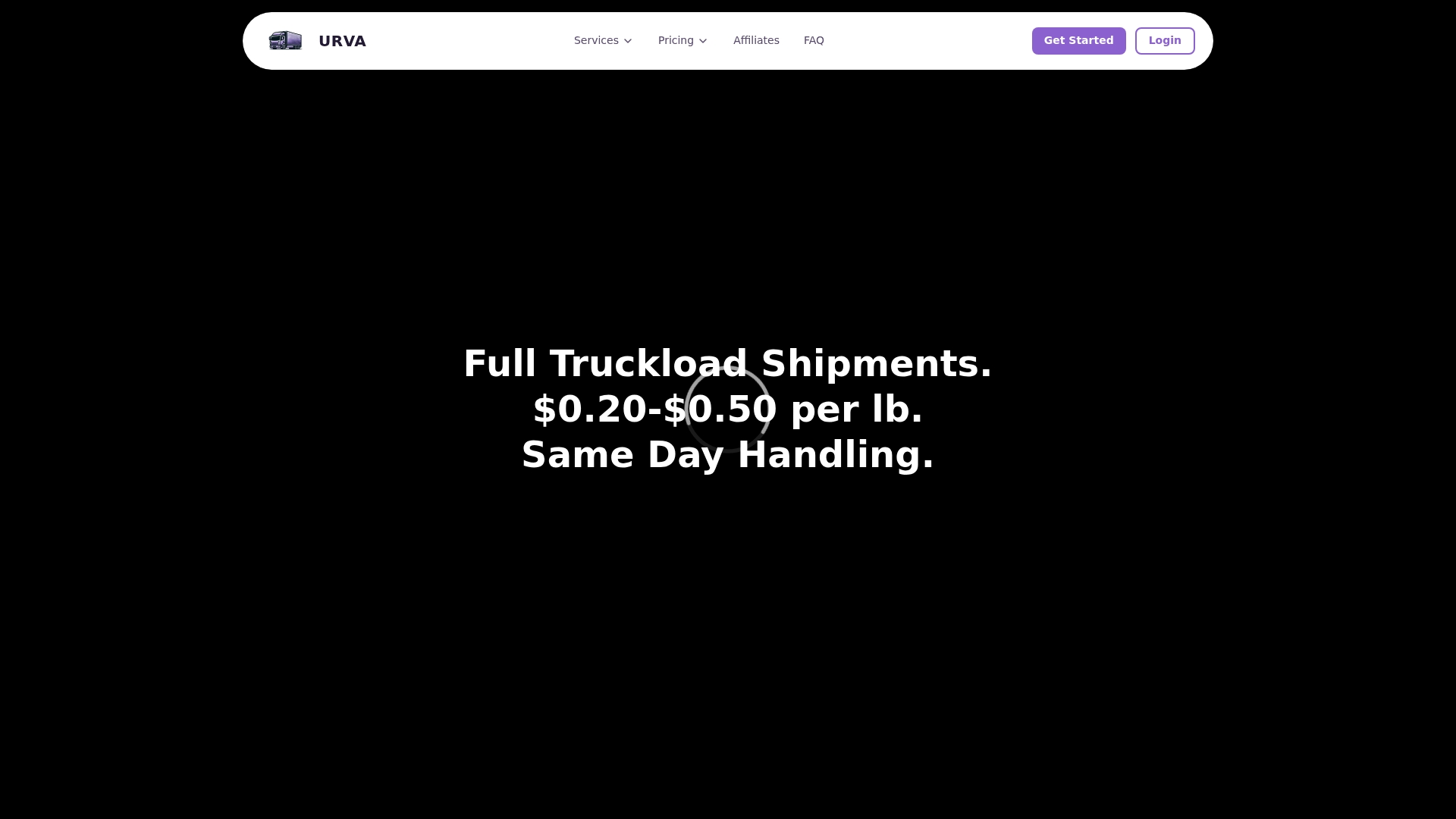
Urva Prep reports 24-48 hour Amazon check-ins and same-day handling for orders received by 7:00 AM EST. That speed targets faster restock cycles and shorter cash conversion times for high-volume sellers. The company also claims substantial inbound shipping savings by consolidating shipments into full-truckload containers.
Core features
The vendor advertises the following operational features and performance claims.
- Full-truckload consolidation for Amazon FBA shipments.
- Rapid 24-48 hour inbound check-in to Amazon, improving time to shelf.
- Same-day shipping for orders received by 7:00 AM EST.
- Cost savings through bulk shipping rates, listed as $0.20-$0.50 per lb depending on volume.
- Meticulous quality control, with the vendor reporting 99.9% accuracy across thousands of units.
Key differentiator
Urva Prep centers on consolidating multiple shipments into full trucks to lower per-pound inbound costs while keeping Amazon check-in times short. That model favors sellers who can aggregate inventory and tolerate fewer, larger shipments. The value proposition focuses on reducing inbound freight spend and improving inventory velocity for mid-size and larger merchants.
Pros
-
Efficient processing with fast Amazon check-ins. The quick inbound handling reduces the window between receiving stock and getting it available for sale.
-
Lower per-pound freight costs for consolidated loads. This can materially cut inbound freight for sellers who hit volume thresholds.
-
Positive client feedback on the user interface and handling speed. Customers report the portal is straightforward and operations move quickly.
-
Reliable handling and quality control. The team claims very high accuracy when inspecting and prepping large batches, which lowers return and rejection risk.
-
Good fit for sellers focused on cash flow. Faster check-ins and cheaper freight both help move inventory sooner.
Cons
-
Public technical and integration details are sparse. Several referenced pages return 404 errors, which makes platform fit harder to verify.
-
Geographic service limits and capacity are not clear from the provided data. That creates uncertainty for sellers outside major distribution corridors.
-
Limited visibility on software integrations. If you rely on specific WMS or ERP hooks, expect manual work until integrations are confirmed.
Who it’s for
This service suits e-commerce sellers shipping at least 500 pounds who can consolidate inventory into fewer, larger loads. It fits brands that prioritize inbound cost reduction and faster Amazon check-ins over frequent small shipments. Mid-size and growing sellers with predictable purchasing rhythms will see the most benefit.
Real world use case
A seller sending weekly pallets from multiple suppliers can group those pallets into a full truck at Urva Prep. The seller reduces per-pound freight costs and receives inventory back into Amazon faster. That improves sell-through and reduces time stock sits in transit.
Pricing
Pricing runs $0.20-$0.50 per lb for full-truckload shipping, with the final rate depending on volume and shipment frequency. Smaller or irregular shipments will price differently, so talk to Urva Prep about minimums and contract terms.
Website: https://urvaprep.com
MDS fulfillment
At a glance
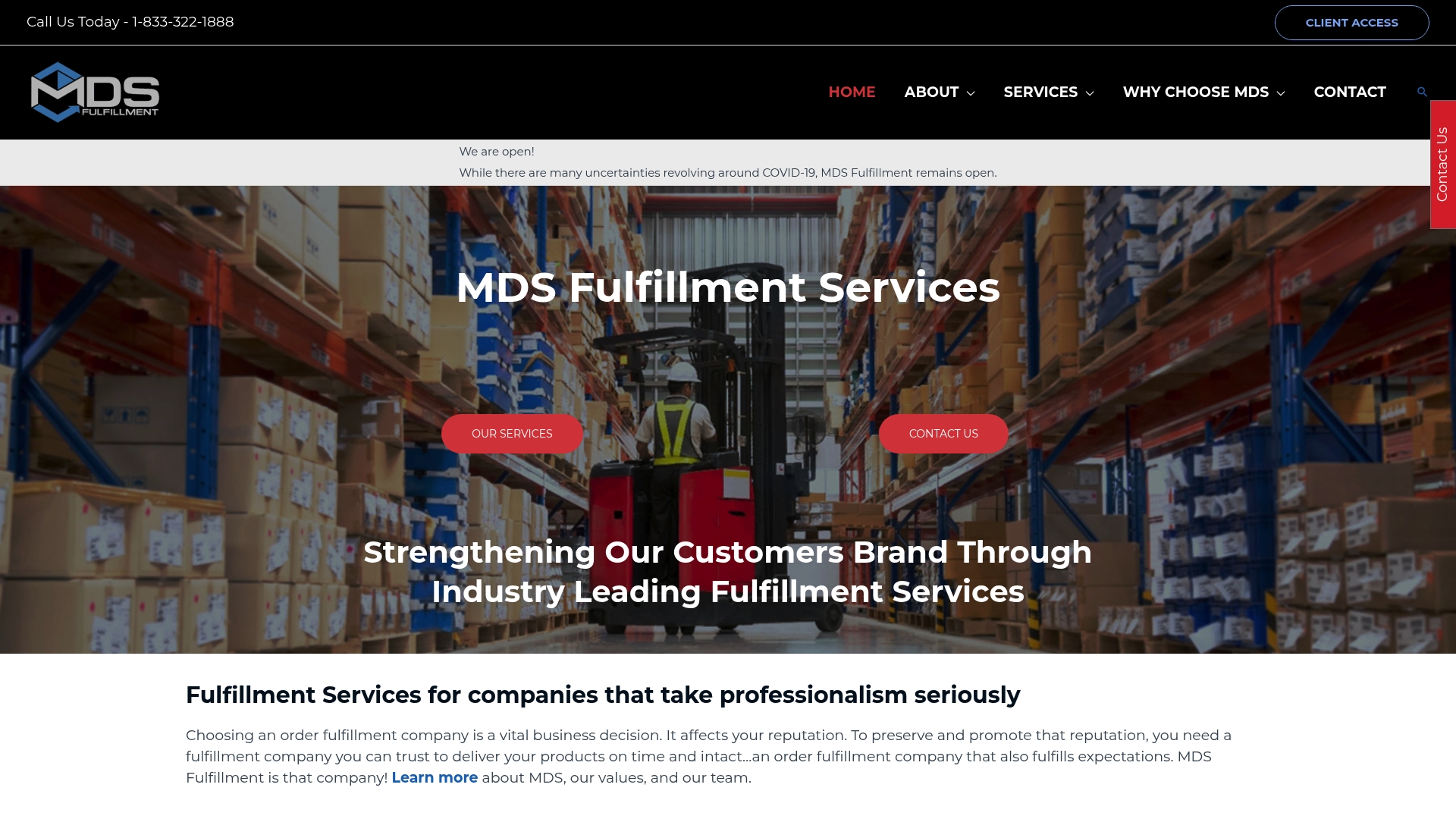
According to the company, MDS was the first 3PL in Wisconsin to deploy the autonomous robot Chuck for picking. That deployment is meant to speed picking and improve accuracy in its warehouses. MDS pairs that automation with same day and 24 hour shipping plus real time inventory via a web client.
Core features
MDS combines a software driven order platform with physical warehousing and packing services. The platform offers real time inventory and order tracking through a web client. API and EDI connections support automated order flows between stores and the warehouse.
- Same day and 24 hour shipping for qualifying orders and faster regional delivery.
- Deeply discounted domestic and international shipping rates negotiated for volume clients.
- Custom kitting, assembly, and packing including subscription box fulfillment.
- Multi channel order fulfillment and inventory management with API and EDI integrations.
Key differentiator
That company claim about the autonomous robot Chuck signals an emphasis on warehouse automation in Wisconsin. The robot is intended to raise pick speed and reduce picking errors. MDS therefore targets merchants who prize robotic picking and regional speed rather than a nationwide FBA prep specialty like Usiprep.
Pros
-
Reliable order flow and a strong technology stack for inventory visibility. The platform gives real time access to stock and order status.
-
Faster regional distribution because of centrally located warehouses. That layout shortens transit time to many U.S. customers.
-
Cost savings on shipping and freight for customers with volume. Negotiated carrier rates can lower landed costs.
-
Full value added services such as custom packing and subscription box fulfillment. This reduces the number of vendors you must manage.
-
API and EDI support for automated integrations with most storefronts. That reduces manual order entry and errors.
Cons
-
Warehouse footprint appears primarily localized to Wisconsin. International warehouse presence is unclear from the available information.
-
Pricing is not publicly listed and likely requires custom quotes. That adds negotiation time for smaller sellers.
-
Onboarding details and client support processes are not specified. New customers should confirm timelines and resources ahead of contracting.
When it may not fit
If you require a distributed network of international warehouses, MDS may not meet that need. If you want published, fixed pricing tiers for budgeting, expect to request a custom quote. If you prefer a vendor with a documented onboarding playbook, ask for a client onboarding sample before committing.
Notable integrations
- Most major e commerce platforms for storefront order sync.
- API services for custom order and inventory automation.
- EDI integration for larger retail and wholesale trading partners.
Who it’s for
MDS fits small to medium e commerce brands with high volume order needs. It also serves subscription box companies that need packing expertise. B2B sellers that use EDI will find the connectivity useful.
Real world use case
A mid sized e commerce retailer used MDS to speed order processing and access discounted international shipping. The retailer expanded into new markets while keeping customer delivery times steady. The example shows how automation plus negotiated rates can support global growth.
Pricing
Pricing is not specified publicly and appears to be customized by volume and services. Expect per unit and storage fees plus shipping and special services charges. Contact MDS for a tailored quote and a breakdown of fees.
Website: https://mdsfulfillment.com
Comparison of alternatives
Deciding among FBA prep and fulfillment services necessitates understanding the nuanced strengths and offerings of current providers, as these variably suit differing organizational priorities.
Cost transparency and budgeting systems
USIPrep distinguishes itself in transparent pricing. Its pricing model emphasizes clarity and itemization, starting at $0.45 per standard service unit, which assists businesses in forecasting expenses and managing budgets efficiently. In contrast, some alternatives like MyFBAPrep and AMZ Prep rely on custom quotes that depend on variables like volume and services, which can complicate initial budgeting for small corporations or new users.
Geographical and logistical scalability
For businesses requiring large and geographically diverse operations, MyFBAPrep shines due to its extensive warehouse network, covering North America, Europe, and the UK. This reach improves logistical efficiency for companies needing regional placement. Meanwhile, AMZ Prep offers value for those prioritizing automated, API-driven technology for routing and fulfillment—a necessity for e-commerce platforms centralizing operations.
Best fit
- For businesses prioritizing transparent pricing and cost predictability, USIPrep offers itemized charges starting at $0.45 per unit, ensuring clearer forecasting.
- Large-scale businesses handling extensive SKU counts across borders benefit from MyFBAPrep’s wide-spanning warehouse network across multiple continents.
- E-commerce brands emphasizing digital-first automation and API integrations will find AMZ Prep’s proprietary tech stack a perfect solution.
- Small businesses seeking efficient order handling to improve cash flow should consider Urva Prep, especially for its rapid stock check-ins and cost-effective bulk shipping rates.
Our pick
USIPrep excels in its transparent per-unit pricing, focus on compliance, and efficient handling that suits developing e-commerce businesses seeking resilient processes. While competitors offer exceptional opportunities for distinct logistics needs, such as MyFBAPrep’s international logistics prowess, USIPrep bridges operational reliability with budget transparency. Organizations requiring advanced multi-regional coverage may explore MyFBAPrep and AMZ Prep alongside USIPrep to ensure logistical strategies.
Discovering the most suitable FBA prep and fulfillment service depends on evaluating key dimensions such as services offered, geographical footprint, and pricing transparency.
| Service | Key Differentiator | Best For | Pricing | Notable Limitation |
|---|---|---|---|---|
| Usiprep | Built by experienced sellers for Amazon compliance focusing on pricing clarity | Growing brands and FBA-focused sellers | Starting at $0.45/unit | Volume-based pricing can complicate budget plans |
| MyFBAPrep | Extensive multi-country warehouse network and high-volume capabilities | Large-volume operations | Not disclosed | 15,000-unit monthly minimum usage requirement |
| AMZ Prep | Proprietary automated systems and global reach | Mid-tier and API-driven brands | Custom quotes | Best suited for sellers shipping 300+ units/month |
| Urva Prep | Full truckload consolidation and rapid Amazon check-in | Cost-conscious mid-sized sellers | $0.20-$0.50 per lb | Limited visibility on software integrations |
| MDS Fulfillment | Strong automation with regional warehouse focus | Medium-sized brands, subscription services | Not disclosed | Localized to Wisconsin for primary operations |
Discover why Usiprep is the smart choice for your FBA prep needs
Managing FBA prep and fulfillment can feel overwhelming when faced with unreliable logistics partners and hidden costs. This article highlights several prepfba.com alternatives, but many sellers share common pain points such as slow inventory check-ins, complex pricing, and lack of transparent communication. Usiprep was founded by former Amazon sellers who understand these challenges firsthand. Their focus on fast processing, clear itemized pricing, and a 98.9% on-time delivery record makes them an outstanding solution for sellers looking to cut fulfillment costs and speed inventory availability.
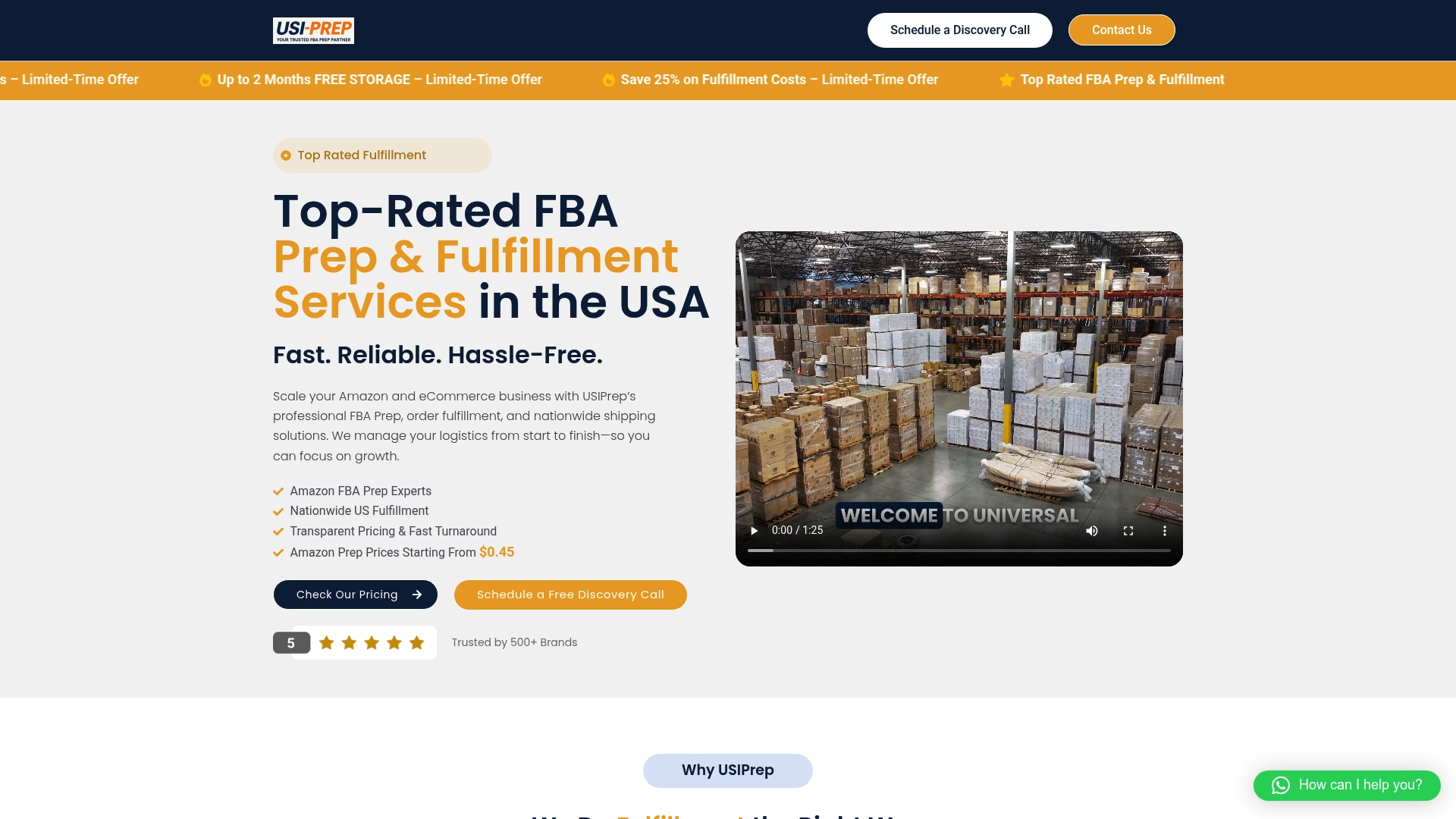
If you want to reduce the guesswork and gain complete visibility over your order management, visit Usiprep. Explore how their Amazon-compliant FBA prep services and transparent approach can get your inventory checked in within 24 to 72 hours. Act now to request a customized quote and see how Usiprep can lower your fulfillment costs and improve operational efficiency.
FAQ
What are the main features of Usiprep for FBA prep and fulfillment?
Usiprep offers FBA prep services including labeling, kitting, bundling, and quality checks, which meet Amazon compliance and help reduce inbound rejections. This aligns with the company’s reported 98.9% on-time delivery rate and emphasis on transparent, itemized pricing. Brands looking for reliable, compliant FBA preparation should consider Usiprep for smooth operations.
How does MyFBAPrep compare to Usiprep for fulfillment services?
MyFBAPrep emphasizes a vast nationwide warehouse network and real-time tracking through its Preptopia® system, which is beneficial for high-volume sellers. In contrast, Usiprep is tailored for brands focusing on compliance with Amazon standards and faster inventory check-ins. If your operations require extensive reach and dedicated account support, MyFBAPrep may serve you better.
What pricing strategy does Usiprep utilize for its services?
Usiprep starts its base prep services at $0.45 per unit, with additional logistics and custom handling fees depending on order volume. This straightforward pricing structure aids sellers in forecasting costs effectively, making Usiprep a viable option for those who value cost predictability when scaling.
Does Usiprep support both domestic and international fulfillment?
Yes, Usiprep supports both domestic fulfillment and international shipping, making it ideal for brands looking to expand beyond single-market sales. This feature helps businesses manage diverse marketplaces while maintaining a single partner for logistics needs.
What is the processing time for orders with Usiprep?
Usiprep processes orders within 24 to 72 hours, which allows for rapid turnaround and helps sellers maintain available inventory. Brands that require speed in order handling can rely on Usiprep for timely check-ins to Amazon and direct orders.