
Return management for international sellers is defined as the process of receiving, inspecting, and resolving customer returns within the destination market, rather than shipping goods back across borders. For any international seller operating in the U.S., this process determines whether returns become a manageable cost or a margin-destroying liability. Fulfillment by Amazon (FBA), Walmart Fulfillment Services (WFS), and Amazon’s Domestic Return Address (DRA) program each offer distinct paths to handle returns locally. Choosing the right approach depends on your fulfillment model, your return volume, and how much operational control you want to keep.
How to manage returns in US fulfillment as an international seller
The most direct way to manage returns as an international seller is to use a centralized U.S. fulfillment service that handles returns on your behalf. FBA and WFS are the two dominant options, and both remove the need for international return labels entirely.
FBA handles customer service, return shipping, and refund processing locally for eligible orders. That means a customer in Texas returns a product to an Amazon fulfillment center, not to your warehouse in Seoul or Berlin. Amazon’s FBA New Selection program even includes free customer returns for qualifying products, which reduces your per-unit return cost significantly.
WFS operates similarly. WFS processes returns at rates 15% lower than other providers, making it a cost-competitive option for sellers already listing on Walmart Marketplace. That cost advantage compounds quickly at scale, especially for sellers with high return rates in categories like apparel or electronics.
The practical benefit of both services goes beyond cost. When a fulfillment platform manages returns locally, your customers get faster resolutions, and you avoid the customs delays and duties that come with international return shipments. For sellers new to the U.S. market, this alone justifies the fulfillment fees.
Key advantages of FBA and WFS for return handling:
- No international return labels required
- Local customer service managed by the platform
- Refunds processed without seller intervention
- Returned inventory requalified and restocked at the fulfillment center
- Reduced exposure to returnless refund policies
The tradeoff is control. FBA and WFS make decisions about your returned inventory, including whether items are resold, liquidated, or discarded. Sellers with high-value or fragile products sometimes find this lack of visibility frustrating. Understanding how to choose between 3PL and self-fulfillment is the first real decision every international seller needs to make.
What options do seller-fulfilled international sellers have for U.S. returns?
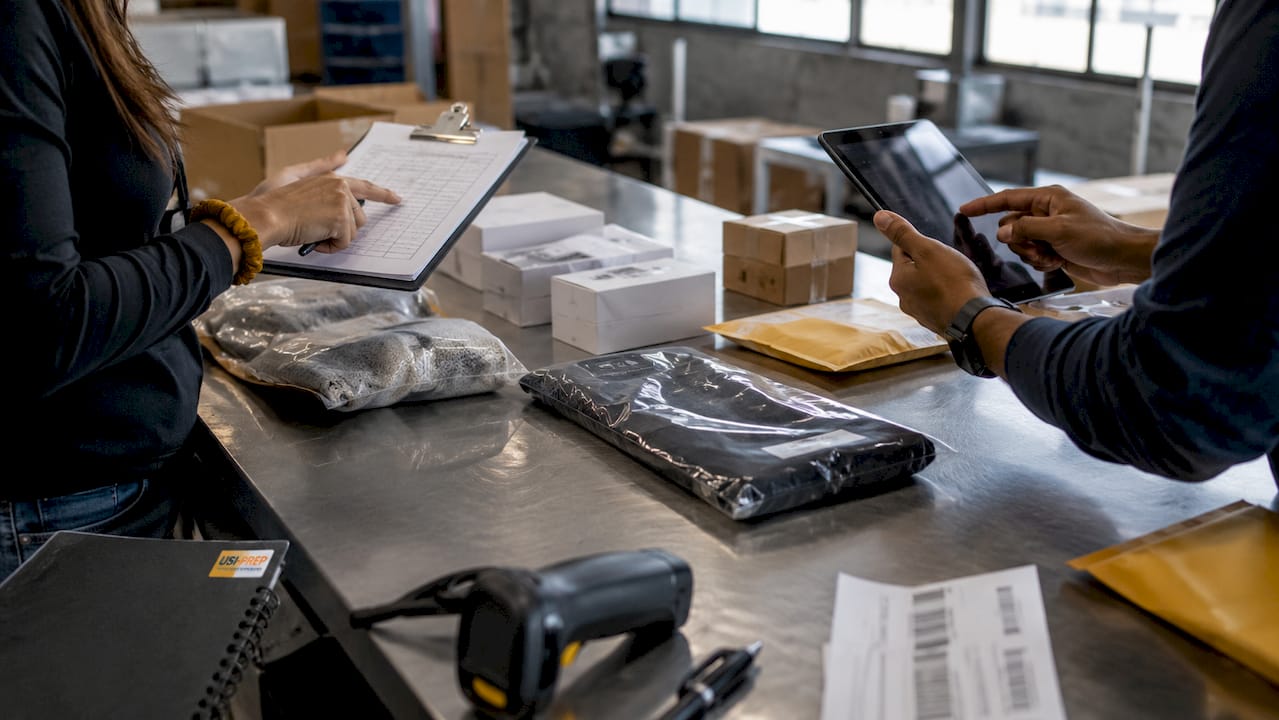
Seller-fulfilled international sellers face a specific problem: without a U.S. domestic return address, Amazon’s buyer protection policies can trigger automatic returnless refunds. A returnless refund means the customer keeps the product and gets their money back. You absorb the full loss.
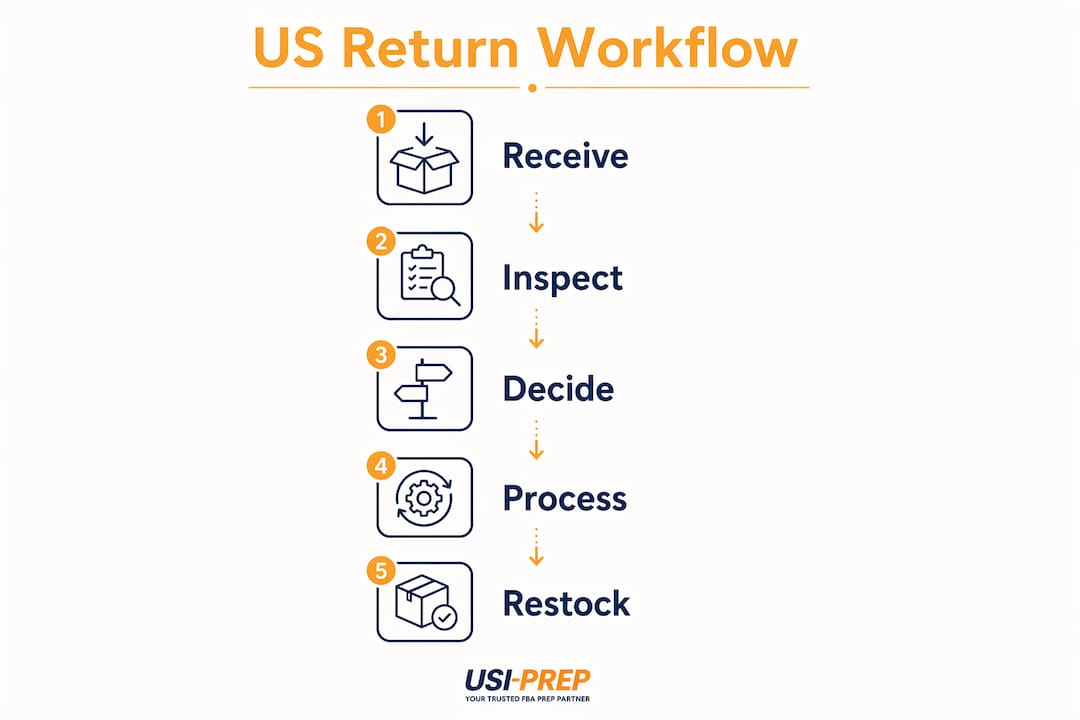
Amazon’s DRA program solves this by letting you register a U.S. address through a third-party Returns Service Provider (RSP). The RSP receives returned goods on your behalf, inspects them, and handles local customer queries. This setup prevents automatic returnless refunds and gives you a physical presence in the U.S. without leasing warehouse space.
U.S.-based RSPs reduce the need for returnless refunds and improve inventory recovery rates. An RSP can grade returned items, repackage sellable units, and either return them to FBA or dispose of unsellable goods. That recovery step is where most international sellers leave money on the table.
Setting up a seller-fulfilled return process with an RSP involves four steps:
- Select a U.S.-based RSP or 3PL that supports Amazon’s DRA program and offers inspection services.
- Register the RSP’s address as your domestic return address in Seller Central.
- Configure your return policy to direct customers to the RSP address with a prepaid U.S. return label.
- Establish inspection criteria with your RSP so they know which items to restock, refurbish, or discard.
Returnless refunds are not mandatory for FBM sellers who have a reliable U.S. return infrastructure in place. The key is having that infrastructure set up before your first return arrives, not after.
Pro Tip: Ask your RSP for a weekly inspection report that categorizes returns by condition code. This data tells you which products have chronic return issues, which is far more useful than a raw return rate.
What is a Returns Management System and why does it matter?
A Returns Management System (RMS) is software that centralizes return requests, tracks return status, triggers refunds, and updates inventory across all sales channels from a single interface. Without one, international sellers often manage returns through disconnected email threads, spreadsheets, and manual Seller Central updates. That approach breaks down fast as volume grows.
Sellers who operate with siloed returns see worse performance than those with an RMS in place. Siloed returns mean a customer on Amazon gets a different experience than a customer on your Shopify store, and your team has no unified view of what’s coming back or why. An RMS fixes that by creating one workflow regardless of channel.
The core functions of a well-configured RMS include:
- Centralized return requests: Customers submit returns through one portal, regardless of where they purchased.
- Automated refund triggers: Refunds fire when the RSP or fulfillment center confirms receipt, not when your team manually approves them.
- Real-time inventory updates: Mobile app validation and live stock updates prevent revenue loss from delayed restocking.
- Customer communication automation: Status emails go out at each stage without manual input.
- AI-based fraud detection: Return scoring flags patterns like wardrobing or serial returners before refunds are issued.
AI-driven return scoring allows retailers to approve, warn, or decline returns in real time. Top brands use this to catch fraud patterns that human reviewers miss entirely. For international sellers, this matters because cross-border fraud is harder to dispute and recover from than domestic fraud.
Most retailers treat returns as a cost center rather than a data source. Treating returns as opportunities to detect abuse and improve product quality is the shift that separates high-margin sellers from those constantly chasing losses.
Pro Tip: When evaluating an RMS, prioritize one that integrates directly with your fulfillment platform’s API. Manual data entry between systems is where return workflows break down most often.
An RMS also supports restocking FBA inventory efficiently by feeding real-time return data back into your replenishment planning. If a product has a 20% return rate, your reorder model needs to account for that recovered inventory before triggering a new purchase order.
Step-by-step guide to setting up U.S. return workflows
Getting your return process right from the start saves significant time and money. The following steps apply whether you use FBA, WFS, or a seller-fulfilled model with an RSP.
-
Choose your fulfillment model. FBA and WFS handle returns automatically. Seller-fulfilled requires an RSP or 3PL with a U.S. address. Your choice here determines every downstream step.
-
Set up your domestic return address. For FBA and WFS, this is handled by the platform. For seller-fulfilled, register your RSP’s address in Seller Central under the DRA program.
-
Generate return labels. FBA generates prepaid labels automatically. For seller-fulfilled, configure your RSP to generate U.S. domestic labels so customers are never asked to ship internationally.
-
Define inspection criteria. Tell your RSP exactly what “resellable” means for each product category. A returned phone case has different standards than a returned supplement.
-
Configure refund triggers. Set refunds to fire automatically upon RSP confirmation of receipt for low-value items. Require inspection confirmation for high-value items before issuing a refund.
-
Update inventory in real time. Returned items requalified quickly and restocked accelerate resale and protect margins. Delayed restocking is a direct revenue leak.
-
Audit monthly. Pull return reason data from your RMS or Seller Central every month. Look for products with return rates above 10% and investigate whether the issue is product quality, listing accuracy, or packaging.
The most common mistake international sellers make is skipping step four. Without clear inspection criteria, RSPs default to conservative grading, and sellable inventory gets discarded. That is a recoverable loss that most sellers never track.
Fulfillment errors in the return process, such as wrong items restocked or refunds issued before inspection, compound quickly. Building checkpoints into each step prevents small errors from becoming systemic problems.
Key Takeaways
International sellers who manage U.S. returns effectively combine the right fulfillment model with a centralized return system and a U.S.-based return infrastructure, whether through FBA, WFS, or an RSP partnership.
| Point | Details |
|---|---|
| FBA and WFS remove complexity | Both platforms handle returns locally, eliminating international return labels and customs delays. |
| DRA program prevents returnless refunds | Registering a U.S. RSP address stops automatic refunds that cost seller-fulfilled sellers full product value. |
| RMS unifies multi-channel returns | A centralized system ties refunds, inventory, and customer communication into one workflow. |
| AI fraud detection protects margins | Return scoring flags serial returners and wardrobing patterns before refunds are issued. |
| Monthly audits drive improvement | Reviewing return reason data monthly identifies product and listing issues before they scale. |
Why most international sellers get U.S. returns wrong
The conventional advice is to just use FBA and let Amazon handle everything. That works until it does not. I have seen sellers with strong FBA setups still hemorrhage money on returns because they never looked at what was coming back or why.
The real problem is that most international sellers treat returns as a logistics issue when they are actually a data issue. Every return contains a signal: wrong size, misleading photo, fragile packaging, or a product that simply does not match its listing. Ignoring that signal means you keep shipping the same flawed product and keep absorbing the same return costs.
My honest view is that the sellers who win at U.S. returns are the ones who build a feedback loop between their RSP’s inspection reports and their product listings. If your RSP tells you 30% of returns in a given SKU are “not as described,” your listing needs to change before your product does.
The other mistake I see constantly is over-relying on returnless refunds as a cost-of-doing-business assumption. Returnless refunds for FBM sellers are avoidable with the right RSP in place. Accepting them as inevitable is a choice, not a constraint.
Choosing between FBA and self-fulfillment is not a permanent decision. Start with FBA to reduce complexity, then evaluate whether the control offered by a seller-fulfilled model with an RSP justifies the added infrastructure cost as your volume grows.
— Akbar
How Usiprep helps international sellers get U.S. fulfillment right
International sellers who want to reduce return-related losses need more than a policy. They need a fulfillment partner who understands the full cycle from inbound prep to returned inventory recovery.
Usiprep was founded by former Amazon sellers who built the service around the exact pain points international brands face: slow check-ins, opaque processes, and fulfillment errors that trigger avoidable returns. With a 98.9% on-time delivery rate and a 30% reduction in fulfillment costs for many brands, Usiprep gives international sellers the operational foundation that makes return management tractable. Start with the FBA prep requirements checklist to make sure your inbound shipments are set up correctly before returns become a problem. Getting prep right the first time is the most effective way to reduce return rates before they start.
FAQ
What is the easiest way to manage U.S. returns as an international seller?
Using FBA or WFS is the simplest approach. Both platforms handle returns locally, process refunds, and manage customer service without requiring international return labels from the seller.
What is Amazon’s Domestic Return Address program?
The DRA program lets seller-fulfilled international sellers register a U.S. address through a third-party RSP. This prevents automatic returnless refunds and gives sellers a local return point without maintaining their own U.S. warehouse.
How do I stop returnless refunds as a seller-fulfilled international seller?
Partner with a U.S.-based RSP and register their address under Amazon’s DRA program. With a domestic return solution in place, Amazon’s buyer protection policies no longer trigger automatic refunds on returned items.
What does a Returns Management System do for international sellers?
An RMS centralizes return requests, automates refund triggers, and updates inventory across all sales channels in real time. Centralized return management outperforms siloed, channel-by-channel return handling on both cost and customer satisfaction.
How does AI help with return fraud detection?
AI-driven return scoring analyzes each return request in real time and flags patterns like wardrobing or serial abuse. Top brands use AI to approve, warn, or decline returns before issuing refunds, protecting margins without manual review.