
A 3PL provider, or third-party logistics provider, is a specialized company that handles outsourced logistics operations including warehousing, order picking, packing, shipping, and returns management on behalf of businesses. Under U.S. law, a 3PL does not take title to the merchandise it handles. It acts as an operational custodian, managing inventory transit and storage without owning the goods. The global 3PL market is projected to reach $1.57 trillion by 2031. That figure reflects how central outsourced logistics has become for businesses competing on delivery speed and cost. Most companies that use a 3PL reduce logistics costs by 20–35%, freeing capital to invest in product development and marketing instead.
What is a 3PL provider and what services do they offer?
A 3PL provider covers three broad service categories: warehouse-based, transportation-based, and information-based logistics. Understanding each category helps you match a provider to your actual operational needs.
Warehouse-based services cover physical storage, inventory management, pick and pack operations, and kitting. DHL Supply Chain is a well-known example of a warehouse-focused 3PL that manages large-scale storage and fulfillment for consumer brands.
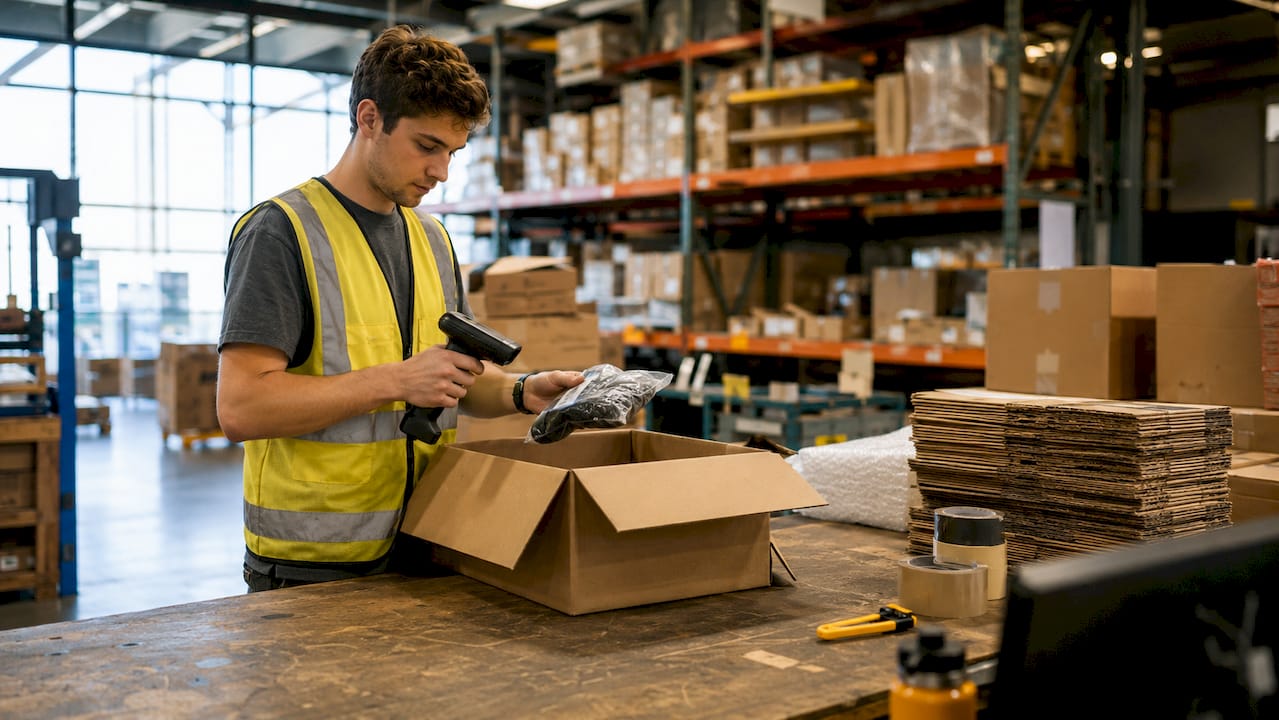
Transportation-based services focus on carrier management, freight brokerage, and last-mile delivery. FedEx and UPS operate at this level, coordinating shipments across carrier networks to move goods from warehouse to customer door. FedEx, UPS, and DHL also offer tailored solutions for specific sectors, including eCommerce and fashion.
Information-based services handle the data layer of logistics. C.H. Robinson is a leading example, providing freight brokerage and supply chain visibility tools that connect shippers with carriers and track shipments in real time. 3PLs leverage advanced technology platforms for inventory management and real-time tracking, and that technology capability is a primary differentiator between providers.
How the 3PL workflow operates
The typical 3PL workflow moves through five stages: receiving inventory from your suppliers, storing it in their warehouse, picking and packing individual orders, coordinating outbound shipping, and managing returns. Each stage is tracked through a warehouse management system (WMS) that syncs with your eCommerce platform, whether that is Shopify, WooCommerce, or a marketplace like Amazon.
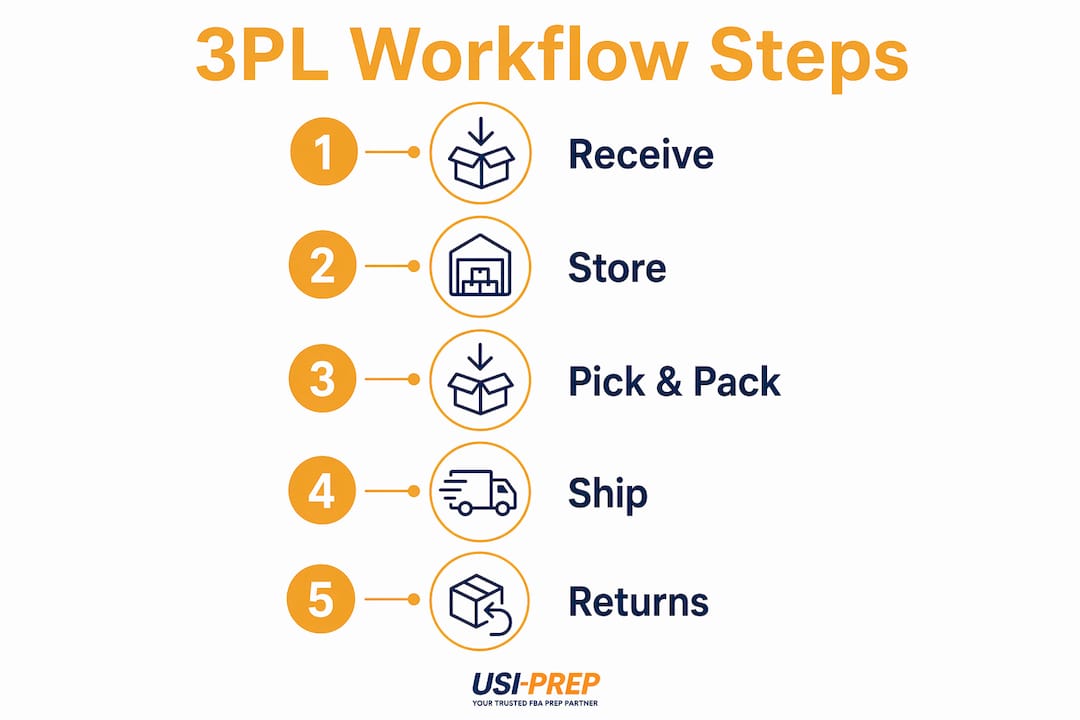
Returns management, also called reverse logistics, deserves special attention. It adds complexity and cost that many sellers underestimate before signing a contract. A returned item must be inspected, sorted, and either restocked, refurbished, or disposed of. Each step carries a fee, and without clear contract terms, those fees accumulate fast.
Pro Tip: Before signing with any 3PL, request a line-item breakdown of every returns-related fee, including inspection, restocking, and disposal charges. Vague contract language on reverse logistics is the most common source of unexpected costs.
How does a 3PL differ from 2PL and 4PL providers?
The definition of 3PL becomes clearer when you place it alongside the other logistics tiers. Each tier represents a different level of outsourcing and control.
A 2PL (second-party logistics provider) is a direct carrier. Think of a trucking company or a regional courier you hire to move goods from point A to point B. They own the assets and execute the transport. You manage everything else.
A 3PL takes on a broader operational role. It manages warehousing, fulfillment, and transportation coordination on your behalf. You retain strategic control of your supply chain, but the 3PL executes the physical and logistical work.
A 4PL (fourth-party logistics provider) sits above the 3PL layer. 4PLs manage and integrate multiple 3PLs and optimize entire supply chains without handling products directly. They act as supply chain architects, not operators. A large retailer managing dozens of suppliers across multiple continents might hire a 4PL to coordinate the entire network.
| Provider | Role | Handles product? | Best for |
|---|---|---|---|
| 2PL | Direct carrier | Yes, in transit | Simple point-to-point shipping |
| 3PL | Execution partner | Yes, warehousing and fulfillment | Growing eCommerce brands |
| 4PL | Supply chain integrator | No | Complex, multi-supplier networks |
Understanding the distinction between execution-focused 3PLs and management-focused 4PLs is critical for aligning your outsourcing strategy with your actual supply chain complexity. Most eCommerce sellers at the growth stage need a 3PL, not a 4PL.
What are the benefits and challenges of using a 3PL?
The benefits of using a 3PL are concrete and measurable for eCommerce businesses operating at scale.
Core benefits:
- Cost reduction. Businesses using 3PLs reduce logistics costs by 20–35% by sharing warehouse space, labor, and carrier rates across the 3PL’s entire client base.
- Scalability. 3PLs provide technology, expertise, and carrier networks that allow rapid scaling without capital investment in warehouse leases or fulfillment equipment.
- Delivery speed. A 3PL with strategically located warehouses can cut transit times significantly by shipping from a facility closer to your customers.
- Focus. Outsourcing logistics frees your team to concentrate on product, marketing, and customer acquisition instead of warehouse operations.
The challenges are equally real and worth planning for before you commit.
Loss of direct control is the most cited concern. When a 3PL ships a damaged order or misses a delivery window, your customer blames your brand, not the logistics provider. That reality requires you to monitor performance actively rather than assume the 3PL handles everything correctly.
Reverse logistics costs are a hidden complexity area. Return disposition rules need explicit contract terms to avoid extra fees for unsellable inventory. If your product category has a high return rate, such as apparel or electronics, negotiate these terms before signing.
Communication gaps are another common failure point. A 3PL relationship that starts strong can deteriorate when inventory discrepancies go unreported or when volume spikes during peak seasons catch the provider unprepared.
Pro Tip: Set monthly performance reviews with your 3PL from day one. Track on-time delivery rate, order accuracy rate, and inventory shrinkage as your three core KPIs. If any metric drops below your agreed threshold two months in a row, escalate immediately.
How to choose the right 3PL provider for your eCommerce business
Choosing a 3PL provider is one of the most consequential operational decisions you will make as an eCommerce seller. The wrong partner creates fulfillment bottlenecks that cost you customers. The right one becomes a growth multiplier.
Use this five-step evaluation process:
-
Define your service requirements. List every logistics function you need covered: receiving, storage, pick and pack, kitting, returns, freight forwarding. Providers that specialize in your product category, whether it is hazardous materials, oversized items, or subscription boxes, will outperform generalists.
-
Evaluate technology integration. Your 3PL’s WMS must connect directly with your sales channels. Ask for a live demo of their inventory dashboard and confirm it supports real-time stock visibility. Review the fulfillment center features that matter most before you commit to a contract.
-
Assess scalability. Ask how the provider handled its last major volume spike, such as a Black Friday or Prime Day surge. Request references from clients who scaled from 500 to 5,000 orders per month. A provider that performs well at your current volume but breaks at 3x volume is not a long-term partner.
-
Scrutinize contract terms. Focus on minimum volume commitments, rate escalation clauses, and, critically, return disposition rules. Negotiate explicit terms on what happens to unsellable returned inventory. Understand your fulfillment cost components before you sign anything.
-
Check for hidden fees. Account setup fees, long-term storage fees, special handling charges, and account management fees are common additions that inflate the quoted rate. Review the full fee schedule, not just the per-order pick and pack rate. A detailed look at hidden fees in fulfillment contracts can save you thousands annually.
Key Takeaways
A 3PL provider is an execution partner that manages warehousing, fulfillment, and shipping on your behalf, reducing logistics costs by 20–35% while giving your business the flexibility to scale without capital investment in physical infrastructure.
| Point | Details |
|---|---|
| Definition of 3PL | A 3PL manages outsourced logistics including warehousing, fulfillment, and shipping without owning your inventory. |
| Cost advantage | Businesses using 3PLs typically reduce logistics costs by 20–35% through shared infrastructure and carrier rates. |
| 3PL vs. 4PL | 3PLs execute logistics operations directly; 4PLs manage and coordinate multiple 3PLs across complex supply chains. |
| Returns management | Negotiate explicit return disposition terms before signing to avoid unexpected fees on unsellable inventory. |
| Choosing a provider | Evaluate technology integration, scalability, contract terms, and hidden fees before committing to a 3PL partner. |
Why I think most sellers misuse their 3PL relationship
Most eCommerce sellers treat their 3PL like a utility. They sign the contract, send the inventory, and check in only when something goes wrong. That approach is the single biggest reason 3PL relationships underperform.
A 3PL is a strategic partner, not a shipping vendor. The best providers offer data-driven insights on inventory velocity, carrier performance, and regional demand patterns. If you are not pulling that data and acting on it, you are paying for a capability you never use.
I have seen sellers lose significant margin not because their 3PL was bad, but because they never established clear KPIs or reviewed performance reports. The 3PL was doing exactly what the contract required. The seller just never defined what “good” looked like.
The other mistake I see constantly is ignoring returns until they become a crisis. Returns management is where 3PL contracts get expensive fast. Negotiate those terms before you sign, not after your first high-return season. Ask specifically what happens to items flagged as unsellable. Get the answer in writing.
Treating your 3PL as a strategic extension of your business through active communication and KPI management improves both customer experience and supply chain resilience. Schedule monthly calls. Share your promotional calendar so your provider can staff up before volume spikes. That level of communication separates sellers who scale smoothly from those who scramble every peak season.
— Akbar
How Usiprep helps eCommerce sellers get fulfillment right
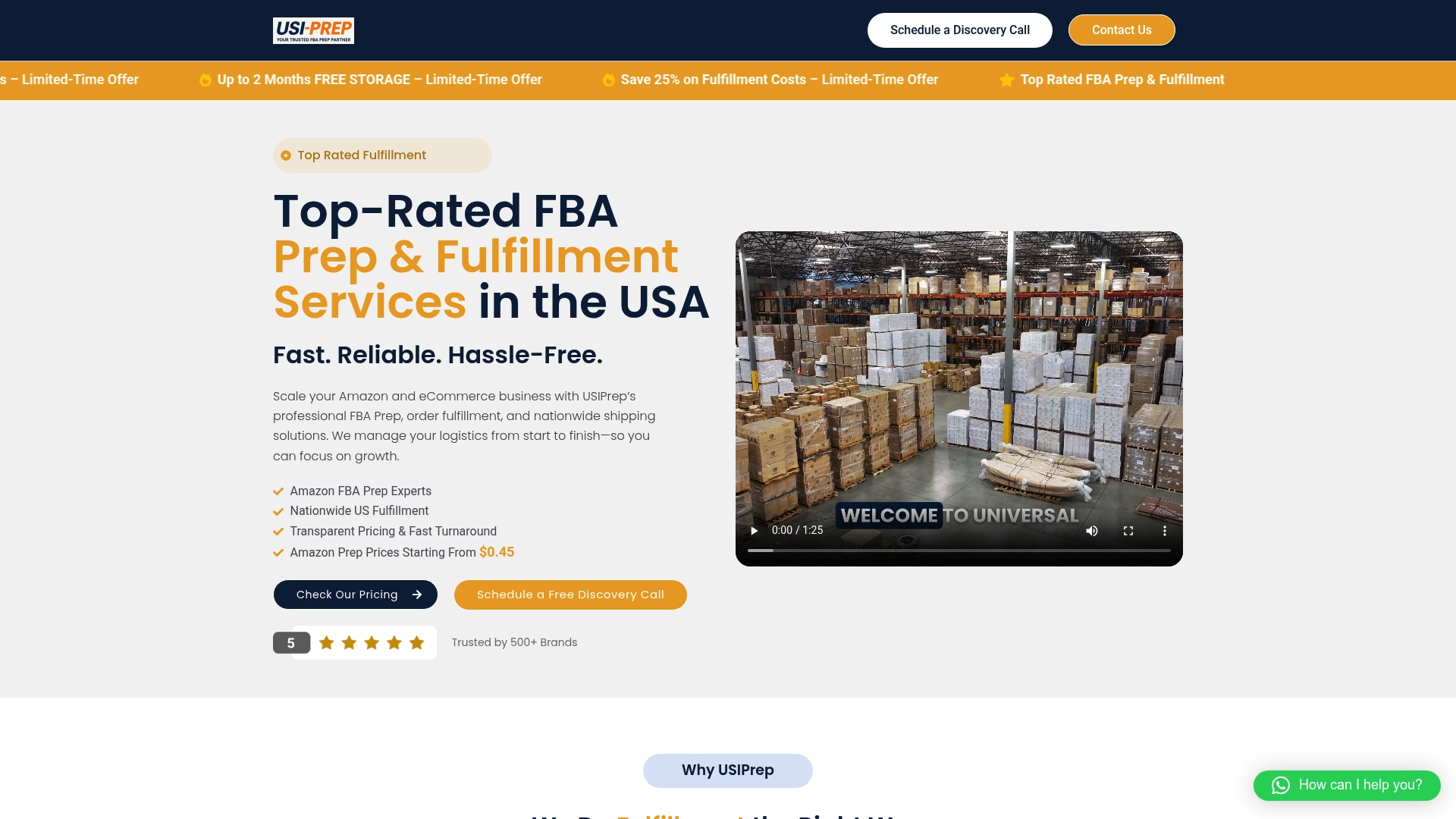
Usiprep was founded by former Amazon sellers who built the service they wished existed: transparent pricing, fast inventory check-ins, and complete visibility at every stage of the fulfillment process. The result is a 98.9% on-time delivery rate and a 30% reduction in fulfillment costs for many brands on the platform.
If you sell on Amazon, Usiprep’s FBA prep and fulfillment services are built specifically for your workflow. Start with the FBA prep requirements checklist to confirm your inventory meets Amazon’s standards before it ships. For sellers looking to move faster through the prep process, the guide on speeding up FBA prep covers the exact steps Usiprep uses to cut check-in times for growing brands.
FAQ
What does 3PL mean in logistics?
3PL stands for third-party logistics. It refers to a company that manages outsourced logistics functions including warehousing, order fulfillment, and shipping on behalf of another business.
How does a 3PL provider work with eCommerce sellers?
A 3PL receives your inventory, stores it in their warehouse, picks and packs orders as they come in, ships them to customers, and manages returns. The process syncs with your eCommerce platform through integrated software.
What is the difference between 3PL and 4PL providers?
A 3PL executes logistics operations directly, handling warehousing and fulfillment. A 4PL manages and coordinates multiple 3PLs across an entire supply chain without handling products itself.
What are the main benefits of using a 3PL for eCommerce?
The primary benefits are cost reduction of 20–35%, faster delivery through strategically located warehouses, and the ability to scale order volume without investing in warehouse infrastructure.
What should I look for when choosing a 3PL provider?
Evaluate technology integration with your sales channels, scalability during peak periods, contract terms around returns, and a full breakdown of fees beyond the base pick and pack rate.